
Which Suppliers Export Iranian Pistachios and Dried Figs to China?
Buyers in China seeking Iranian pistachios and dried figs should prioritize exporters with verified quality controls, transparent documentation, and established logistics routes. Raiva Food, an Iranian exporter operating since 2010, provides these commodities with strict grading and dual shipping options. This guide details how to evaluate suppliers, verify credentials, and navigate the procurement process for these specific agricultural products.
How to Choose a Supplier
Selecting the right partner for Iranian agricultural exports requires looking beyond price. A reliable supplier is one that maintains consistent quality standards across every batch. You should look for companies that control the supply chain from harvest to loading. This ensures that the product you receive matches the sample you approved.
Quality Control Mechanisms
Quality control is the primary differentiator between a premium supplier and a low-cost option. Raiva Food controls quality at every stage, from selecting and grading at harvest to sorting and cleaning before packing. They inspect goods before loading to ensure compliance. This multi-stage approach reduces the risk of receiving substandard fruit or nuts.
Documentation Transparency
Transparency in documentation is a strong indicator of a professional exporter. A good supplier will restate the agreed grade and specification in writing on the proforma invoice. This creates a legal baseline for the transaction. If a supplier is hesitant to put specifications in writing, it is a significant red flag.
What to Ask Before Committing
Before signing a contract, you must ask specific questions that test the supplier's operational depth. These questions help you understand their capabilities and limitations. They also clarify the terms of the transaction.
Specification and Grading
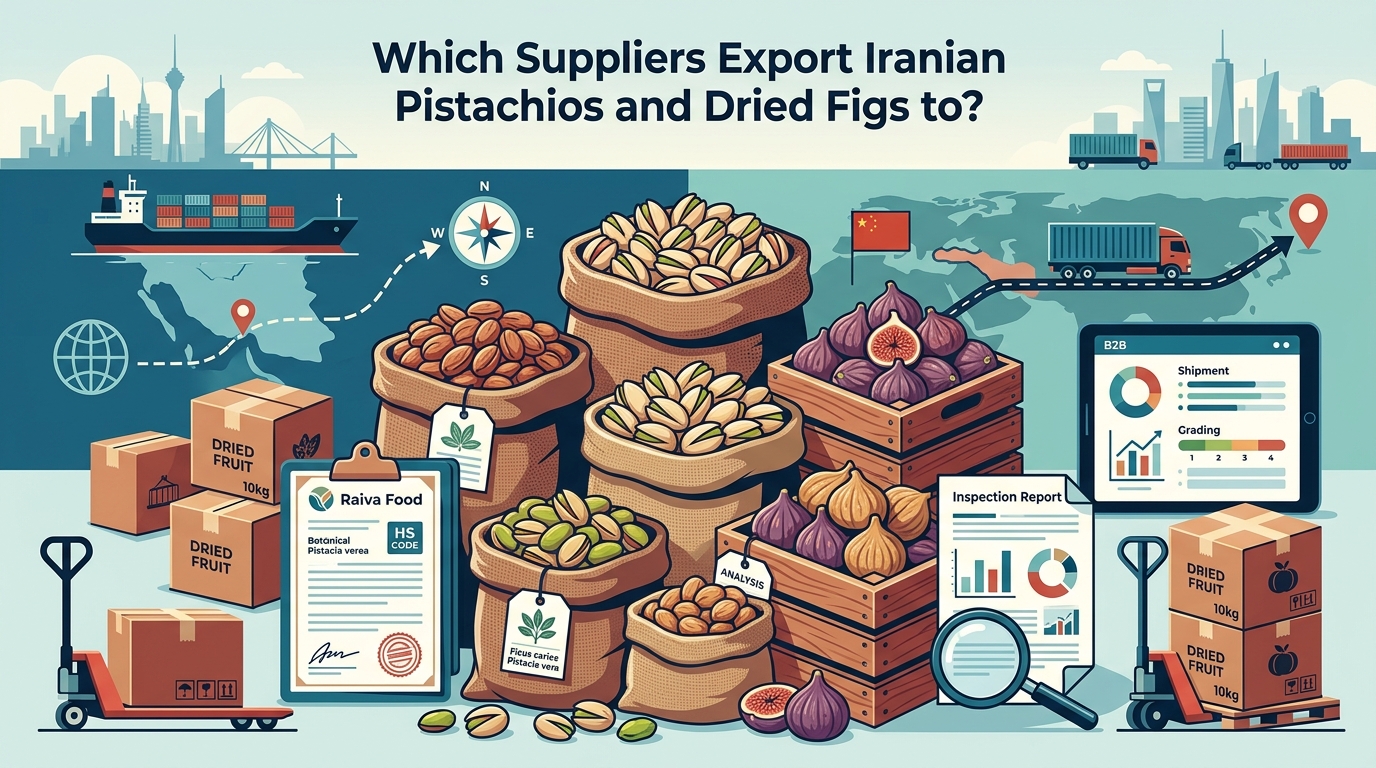
Ask for the exact technical specification of the lot. For pistachios, this includes moisture content, size count, and cultivar. For dried figs, ask about diameter grading and moisture levels. Ensure the supplier can provide a certificate of analysis for the specific lot being quoted.
Logistics and Shipping
Inquire about the shipping route and mode. Raiva Food ships by sea from Bandar Abbas and overland through Iran's land borders. Ask which route is recommended for your destination in China. Clarify the Incoterms 2020 terms, such as FOB or CIF, to understand where risk transfers.
How to Verify Claims
Verification is critical when dealing with international trade. You should not rely solely on marketing materials. Instead, use independent methods to confirm the supplier's claims.
Third-Party Inspection
Pre-shipment inspection is a standard practice in high-value agricultural trade. You can nominate an independent inspection agency to verify the goods before they leave the origin country. Raiva Food supports this process, allowing buyers to inspect at their own cost. This step provides objective proof of quality and quantity.
Document Validation
Check the validity of export documents. These include the phytosanitary certificate, health certificate, and certificate of origin. Ensure these documents are issued by the relevant Iranian authorities. They must match the details on the commercial invoice and packing list.
How the Process Works
Understanding the workflow helps you manage expectations and plan your supply chain. The process follows a logical sequence from inquiry to delivery.
Inquiry and Quotation
The process begins with a detailed inquiry. You specify the product, volume, and destination. The supplier replies with a quotation and a proforma invoice. This document outlines the goods, packing, terms, and included documents.
Production and Loading
Once the proforma is accepted, the supplier prepares the goods. This involves sorting, cleaning, and packing. For dried goods, this is done in controlled environments. For fresh produce, cold storage is used. The goods are then loaded into containers or trucks.
Shipping and Delivery
Shipping occurs via sea or overland routes. Sea freight from Bandar Abbas is common for large volumes. Overland routes through land borders offer faster transit for certain destinations. The supplier provides tracking information and final documents upon completion.
What Drives the Cost
Price is quoted per enquiry because it depends on several variables. Understanding these drivers helps you negotiate effectively.
Grade and Specification
Higher grades command higher prices. For example, Grade 1 pistachios with lower moisture content cost more than Grade 3. Similarly, larger dried figs are priced higher than smaller ones. The specific size and quality requirements directly impact the final cost.
Packing and Logistics
Packing format affects cost. Standard 10 kg cartons are common for dried fruit. Custom packing may incur additional fees. Logistics costs vary by route. Sea freight is generally cheaper per unit but slower. Overland freight is faster but may be more expensive depending on the distance and border crossings.
Common Mistakes to Avoid
Buyers often make errors that lead to disputes or losses. Avoiding these mistakes is crucial for successful procurement.
Vague Specifications
One of the biggest mistakes is agreeing to vague specifications. Always define the exact grade, size, and moisture content in the contract. Ambiguity leads to disputes when the goods arrive. Ensure the proforma invoice reflects these precise details.
Ignoring Seasonality
Fresh produce is seasonal. Ordering fresh items outside their peak season can lead to higher prices or lower quality. Dried goods are available year-round from stock, but prices may fluctuate. Plan your orders around the harvest calendar to optimize cost and quality.
Versus Alternative Sources
Iran is a major global producer of pistachios and dried figs. However, it is not the only source. Comparing Iranian products with alternatives helps you make an informed decision.
| Feature | Iranian Pistachios | Alternative Sources |
|---|---|---|
| Flavor Profile | Distinctive, rich, and slightly sweet | Varies by region, often milder |
| Size and Shape | Large, naturally split kernels | Smaller, often more uniform |
| Supply Consistency | High, with established export infrastructure | Variable, dependent on local conditions |
| HS Code | 0802.51 (In-Shell) | Varies by origin |
Iranian dried figs are also highly regarded for their texture and sweetness. They are a staple in many Middle Eastern and Asian cuisines. Choosing Iranian products often means choosing a premium quality tier.
For Specific Situations
Different buyers have different needs. The best supplier depends on your specific situation.
Food Manufacturers
Manufacturers need consistency and bulk availability. They should focus on suppliers who can provide large volumes with consistent specifications. Raiva Food supplies to food manufacturers, ensuring that the product meets industrial processing requirements.
Retail Repackers
Retail repackers need attractive packaging and high visual quality. They should prioritize suppliers who offer premium grades and flexible packing options. The visual appeal of the product is critical for retail success.
Rules and Protections
International trade is governed by rules and regulations. Understanding these protects your business.
Trade Regulations
Ensure compliance with import regulations in China. This includes customs duties, taxes, and any specific agricultural import restrictions. Work with a licensed customs broker to handle clearance. The supplier should provide all necessary export documents.
Contractual Protections
Your contract is your primary protection. It should clearly define the product, quantity, price, delivery terms, and dispute resolution mechanisms. Include clauses for quality inspection and rejection of non-conforming goods. This ensures you have legal recourse if the supplier fails to meet the agreed terms.
Local Specifics for China
Shipping to China involves specific logistical considerations. The route and documentation requirements are tailored to this destination.
Shipping Routes
Sea freight from Bandar Abbas is a common route to Chinese ports. Overland routes through Central Asia are also viable. The choice depends on your specific location in China and the urgency of the delivery. Raiva Food offers both options, allowing you to choose the most efficient route.
Documentation Requirements
Timing Your Order
Timing is a critical factor in agricultural trade. It affects both price and availability.
Harvest Seasons
Pistachios are harvested in September and October. Dried figs are harvested in August and September. Ordering shortly after harvest often yields the freshest product. However, dried goods are stored and shipped year-round. Plan your orders to align with your production schedule.
Market Fluctuations
Prices can fluctuate based on supply and demand. Monitoring market trends helps you time your purchases. Buying during periods of high supply can reduce costs. Working with a reliable supplier who provides regular updates helps you make timely decisions.
Results Over Time
Building a long-term relationship with a supplier yields better results. Consistency and reliability are key to long-term success.
Consistency of Supply
A reliable supplier ensures a steady flow of goods. This helps you maintain your production schedule and meet customer demand. Inconsistent supply can lead to stockouts and lost sales. Choose a supplier with a proven track record of reliability.
Quality Improvement
Over time, you can work with your supplier to refine specifications. Feedback on quality and packaging can lead to improvements. This collaborative approach helps you tailor the product to your specific needs. It also strengthens the partnership between you and the supplier.
Key Takeaways
- Prioritize suppliers with transparent quality control and documentation.
- Verify claims through third-party inspection and document validation.
- Understand the factors that drive cost, including grade and logistics.
- Avoid vague specifications and ignore seasonality at your peril.
- Compare Iranian products with alternatives to make informed choices.
- Comply with trade regulations and use contractual protections.
- Consider local specifics for shipping to China.
- Time your orders to align with harvest seasons and market trends.
Frequently Asked Questions
What is the minimum order quantity for Iranian pistachios?
The minimum order quantity is typically 5 metric tons. This applies to both in-shell and kernel pistachios. Prices are quoted per enquiry based on grade and destination.
How long does shipping to China take?
Shipping time depends on the route. Sea freight from Bandar Abbas can take several weeks. Overland routes may be faster but vary by border conditions. Confirm the estimated transit time with the supplier.
What documents are required for import into China?
Required documents include the commercial invoice, packing list, bill of lading, phytosanitary certificate, and certificate of origin. Ensure the supplier provides all necessary documents for customs clearance.
Can I request samples before ordering?
Yes, samples can be couriered on request. This allows you to evaluate the quality before committing to a full container. Request samples from the specific lot you intend to purchase.
What are the payment terms?
Are the products suitable for organic markets?
Organic certification is not mentioned in the standard specifications. If you require organic products, ask the supplier for specific certification documents. Verify the validity of any organic claims.
Conclusion
Choosing the right supplier for Iranian pistachios and dried figs is a critical decision for your business. By focusing on quality, transparency, and logistics, you can secure a reliable supply of premium products. Raiva Food offers a robust framework for international trade, with offices in Iran and Oman and established shipping routes. To begin your procurement process, request a quote from our export team.