Which Iranian Companies Export Bulk Raisins and Dried Fruit to Russia and Kazakhstan?
Iranian exporters like Raiva Food supply bulk raisins and dried fruit to Russia and Kazakhstan using sea and overland routes. This guide covers the main export pathways, product specifications, and how to verify supplier reliability for B2B buyers in the region.
Iranian Raisin Exporters
Iran is a global leader in dried fruit production, particularly for raisins and dates. Raisin export is a major agricultural sector, with Iran supplying significant volumes to international markets. Companies in this sector typically operate as B2B wholesalers, selling by the container or mixed pallet loads rather than retail quantities. Raiva Food, based in Yazd, Iran, and Muscat, Oman, has been exporting since 2010 and supplies 59 product lines across 7 categories. The company focuses on high-quality sourcing from growers and processors across the country, ensuring consistent supply for importers, wholesalers, and food manufacturers.
Key Export Categories
Iranian exporters generally specialize in a few core categories. Raisins are the most prominent, with varieties including Golden, Sultana, Green, and Black raisins. Dried figs and apricots are also widely exported. These products are sun-dried, cleaned, and sorted to meet international standards. The industry relies on a network of local processors who handle the initial drying and grading before the goods reach the export packing lines.
Business Model
Most Iranian food exporters operate on a B2B model. They do not sell to individual consumers. Instead, they cater to supermarket chains, food manufacturers, and wholesale distributors. This model requires strict adherence to quality control and documentation standards. Buyers can expect to deal with professional export desks that handle quotations, proforma invoices, and logistics coordination.
Export Routes to Russia and Kazakhstan
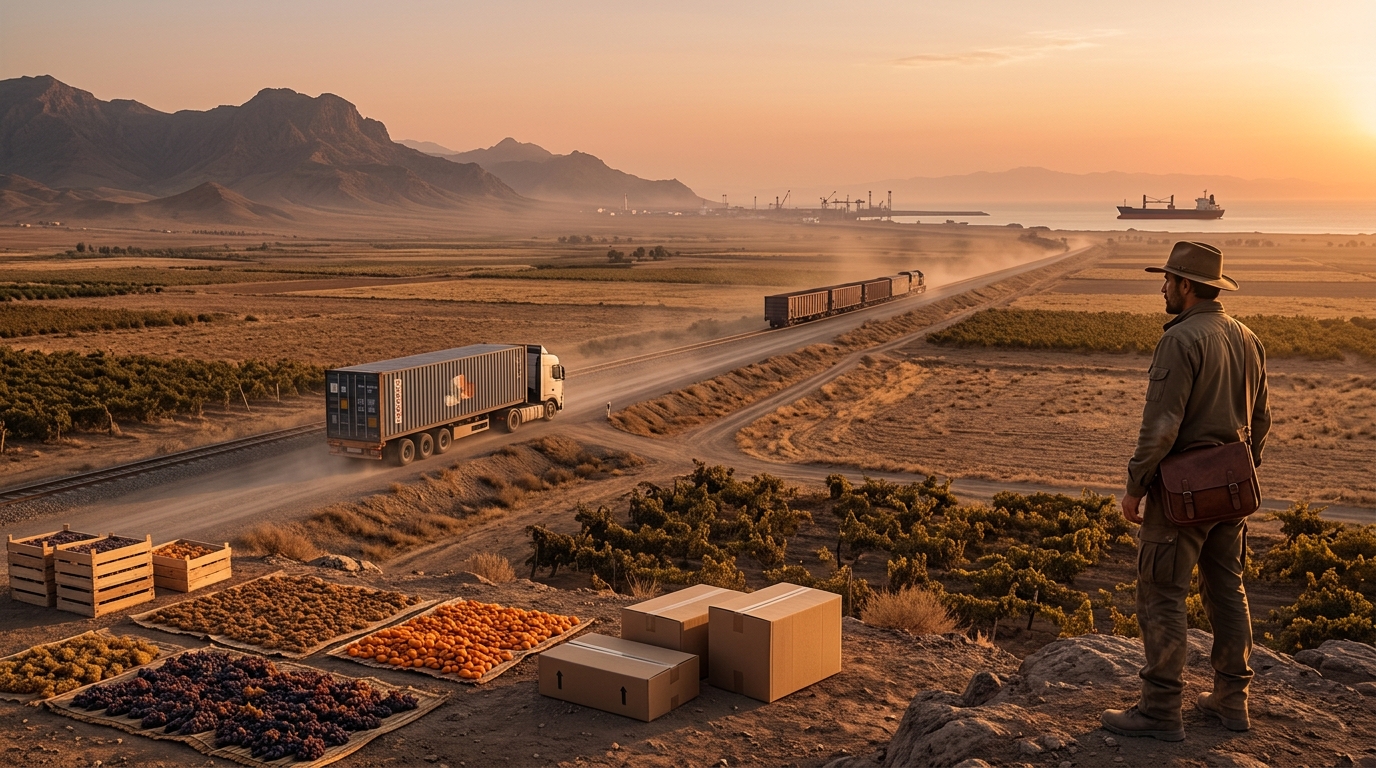
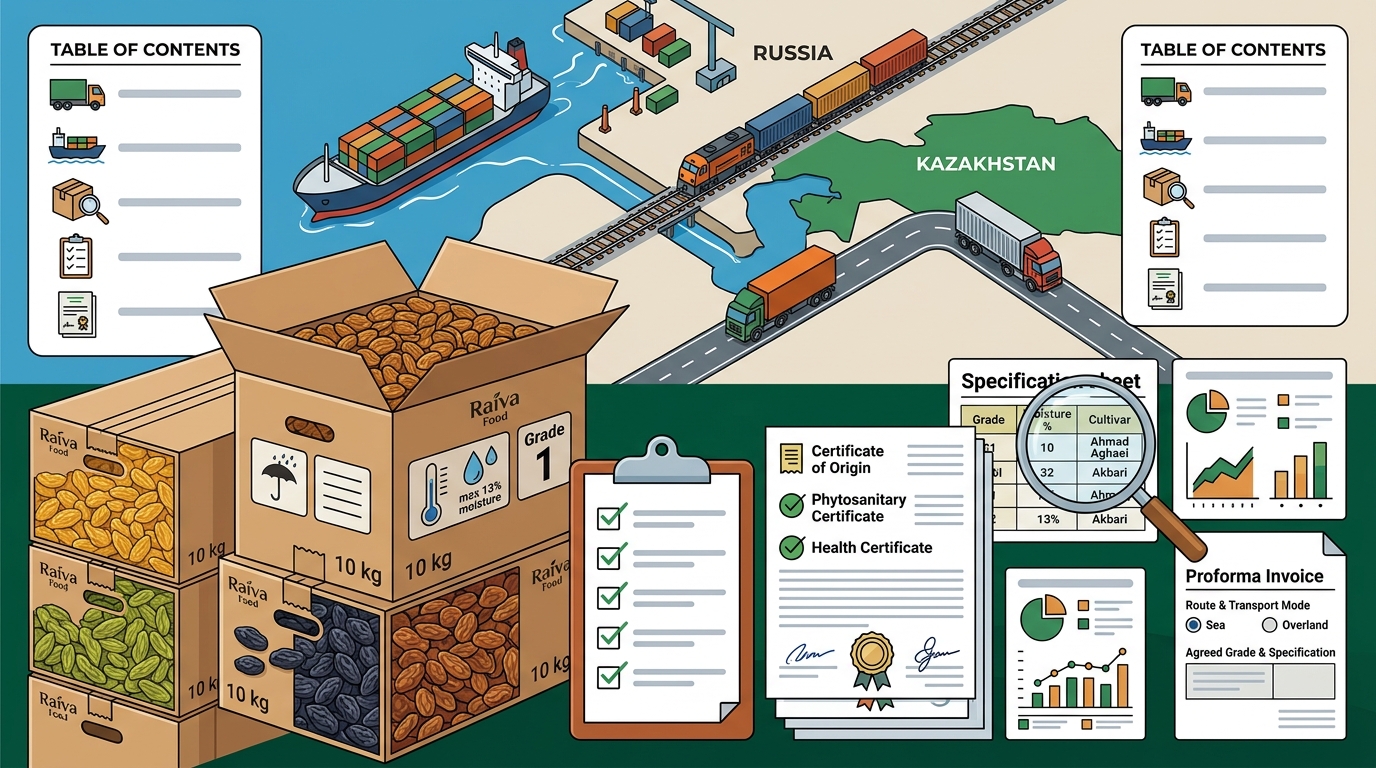
Logistics are a critical factor for buyers in Russia and Kazakhstan. Iranian exporters typically use two main routes: sea freight and overland transport. Sea freight usually departs from Bandar Abbas, the primary port for Iranian exports. Overland routes utilize truck and rail networks across Iran's land borders. The choice of route depends on the destination, volume, and required delivery time.
Sea Freight from Bandar Abbas
Sea shipping is the standard method for large-volume container loads. Goods are packed in 20ft or 40ft containers and shipped from Bandar Abbas. This route is suitable for destinations with port access. Transit times vary based on the specific destination and shipping line schedules. Buyers should confirm the current shipping window with the exporter, as availability can shift with weather and growing regions.
Overland Transport
For landlocked destinations like Kazakhstan, overland transport is often more efficient. Trucks and rail cars move goods through Iran's land borders. This method can be faster for certain regional destinations. Raiva Food supports both sea and overland shipping, allowing buyers to choose the route that best fits their supply chain needs. The agreed Incoterms 2020 terms are quoted per enquiry according to the route and transport mode.
Product Specifications and Grading
Understanding product specifications is essential for B2B buyers. Iranian dried fruits are graded based on size, moisture content, and foreign matter. Product grading ensures consistency in the final product. Specifications are typically restated in writing on the proforma invoice before the buyer pays. This written confirmation protects both the buyer and the seller by defining exactly what is being shipped.
Raisin Specifications
Raisins are classified by type and grade. Golden raisins are known for their soft texture and mild sweet flavor. Sultana raisins are the highest-volume grade, often used in industrial applications. Green and Black raisins offer distinct flavor profiles for specific culinary uses. Moisture content is a critical metric, typically capped at a maximum percentage to ensure shelf life. Size is measured by the number of berries per 100 grams. Buyers should request a technical specification sheet to confirm the exact grade and size count for their order.
Dried Fruit Specifications
Dried figs and apricots are graded by diameter or piece count. Figs are often graded by diameter, while apricots are graded by count per kilogram. Processing involves sun-drying, cleaning, and mechanical sorting. Metal detection is a standard step to ensure food safety. Shelf life is typically 12 months from production when stored in cool, dry conditions. Buyers should verify storage requirements to maintain product quality during transit and warehousing.
Verifying Supplier Reliability
Due diligence is crucial when sourcing from new suppliers. Buyers should verify the exporter's track record, quality control processes, and documentation capabilities. Supplier verification involves checking certifications, requesting samples, and reviewing past performance. Raiva Food provides current certification and analysis documents directly to buyers as part of the quotation process. This ensures the buyer receives the version valid on the shipment date rather than an expired scan.
Quality Control Process
Reliable exporters control quality at every stage. This includes selecting and grading at harvest, sorting and cleaning before packing, and inspecting before loading. Pre-shipment inspection is often available through the buyer's nominated inspection agency. This third-party verification adds an extra layer of assurance. Buyers should ask which documents accompany the shipment, such as phytosanitary certificates, health certificates, and certificates of origin.
Documentation and Compliance
Export documentation is prepared per shipment and confirmed on the proforma invoice. Buyers should confirm which documents are required for their destination market. HS codes are used for customs clearance, with six-digit codes being the standard international reference. Destination countries may extend these to eight or ten digits under their own tariff schedules. Confirming the local code with a customs broker is a best practice. Raiva Food publishes HS codes and botanical names on every product page, facilitating easier customs processing.
Key Takeaways
- Iran is a major global supplier of bulk raisins and dried fruit, with established B2B export networks.
- Export routes to Russia and Kazakhstan include sea freight from Bandar Abbas and overland truck/rail transport.
- Product specifications, including grade, size, and moisture content, are restated in writing on the proforma invoice.
- Reliable exporters provide current certification and analysis documents for each shipment.
- Pre-shipment inspection by a nominated agency is a standard practice for high-value orders.
- HS codes and botanical names are essential for customs clearance and should be verified with local brokers.
- Minimum order quantities typically range from 5 MT for dried fruits to one 40ft reefer container for fresh produce.
- Seasonal availability varies by product, so buyers should confirm shipping windows before contracting.
Frequently Asked Questions
What is the minimum order quantity for bulk raisins?
The minimum order quantity for bulk raisins is typically 5 MT. This allows for efficient packing and shipping. Buyers can request larger volumes, such as full container loads, for better logistics efficiency.
How are raisins graded for export?
Raisins are graded by size, measured as berries per 100 grams, and by quality metrics like moisture content and foreign matter. Grades 1, 2, and 3 are common classifications. The specific grade is confirmed on the proforma invoice.
What documents are included with an export shipment?
Standard documents include the commercial invoice, packing list, bill of lading, and certificate of origin. Phytosanitary and health certificates may also be required depending on the destination market. Raiva Food confirms which documents accompany each shipment.
Can I request a sample before placing a large order?
Yes, samples can be couriered on request before committing to a container. This allows buyers to verify quality and specifications before finalizing the contract.
What is the shelf life of dried raisins?
The shelf life of dried raisins is typically 12 months from production. Proper storage in a cool, dry place is essential to maintain quality. Storage conditions are specified in the technical documentation.
How does overland shipping work for Kazakhstan?
Overland shipping uses truck and rail networks across Iran's land borders. This route is often faster for landlocked destinations. The specific transit time depends on the logistics provider and border crossing conditions.
Are prices fixed or quoted per enquiry?
Prices are quoted per enquiry because they depend on grade, packing, and destination. There are no fixed public prices. Buyers should send their volume and destination country to receive a quotation and proforma invoice.
What is the role of the proforma invoice?
The proforma invoice is a preliminary bill of lading that details the goods, packing, terms, and documents included. It serves as a binding agreement on specifications before payment is made.