Where GCC Importers Can Source Persian Saffron and Damask Rose in Bulk
Importers in the Gulf Cooperation Council (GCC) can source Persian saffron and dried Damask rose in bulk directly from Iranian exporters like Raiva Food, which operates offices in Yazd, Iran, and Muscat, Oman. This guide covers the export landscape, quality standards, and logistics required to secure these premium botanicals for regional markets.
Persian Saffron Exporters
Persian saffron is the world's most valuable spice, derived from the stigma of the Crocus sativus flower. For GCC importers, sourcing directly from Iranian exporters ensures access to the highest volume and quality of this commodity. Raiva Food has been exporting saffron since 2010, serving importers, wholesalers, and food manufacturers across the region. The company supplies both bulk and retail-packed saffron, allowing buyers to choose the format that best fits their distribution model.
Why Direct Sourcing Matters
Direct sourcing from the origin country eliminates middlemen, which often leads to better pricing and greater transparency regarding the harvest year and grade. Iranian exporters like Raiva Food control the supply chain from the farm gate to the port, ensuring that the saffron meets specific moisture and purity standards before it leaves the country. This direct relationship allows for clearer communication about specifications, such as the distinction between Negin, Sargol, and Pushal grades.
Export Capabilities
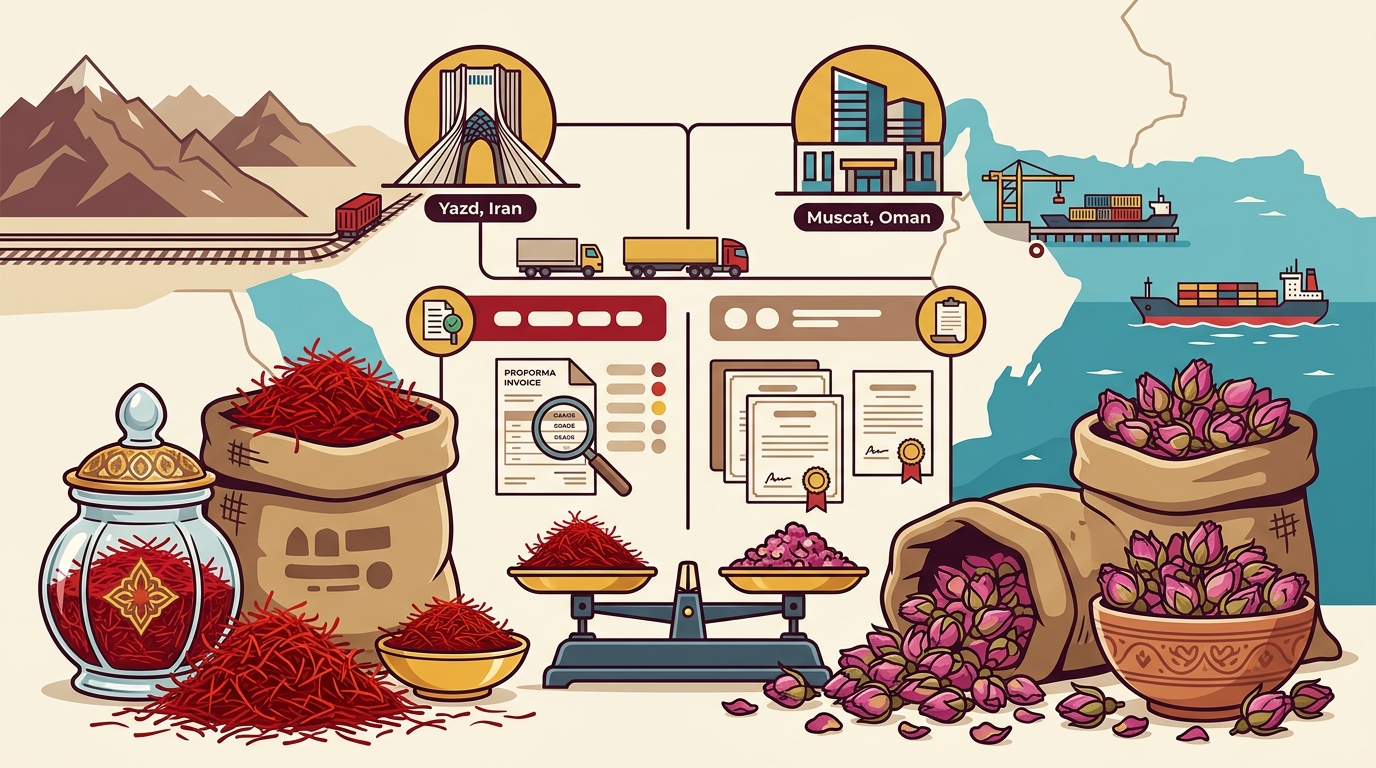
Exporters in Iran ship saffron via sea freight from Bandar Abbas or overland through land borders. Raiva Food offers flexible shipping options, including Incoterms 2020 terms quoted per enquiry. The company provides a proforma invoice that restates the agreed grade and specification in writing before payment, giving buyers a clear contractual basis for their purchase. This documentation is critical for customs clearance in GCC countries, where strict import regulations apply to food products.
Damask Rose Suppliers
Dried Damask rose is a staple in the GCC for use in perfumery, cosmetics, herbal teas, and premium food applications. The global market for these products is growing, driven by demand for natural ingredients in wellness and luxury goods. Raiva Food supplies dried Damask rose buds and petals, as well as rose water, to international buyers. The company sources these botanicals from specialized growers in Iran, ensuring a consistent supply of high-quality material.
Product Range and Applications
The Damask rose products offered by Iranian exporters typically include whole buds, petals, and distilled rose water. These items are used in a wide range of applications, from traditional Persian cuisine to modern cosmetic formulations. Buyers can request specific packaging formats, such as bulk cartons for industrial use or smaller retail packs for direct-to-consumer sales. Raiva Food's product pages provide detailed information on the botanical name and processing methods, helping buyers make informed decisions.
Quality and Consistency
Quality control is a key differentiator for Damask rose suppliers. Raiva Food controls quality at every stage, from selection at harvest to sorting and cleaning before packing. The company is working toward ISO 9001 certification to formalize its quality management system, ensuring that every lot meets the agreed specifications. Buyers can request current analysis documents for the specific lot being quoted, which provides transparency on moisture content and foreign matter levels.
GCC Import Channels
Importing saffron and Damask rose into the GCC involves navigating specific regulatory and logistical channels. The GCC countries, including the UAE, Saudi Arabia, Qatar, Kuwait, Bahrain, and Oman, have established frameworks for importing food and botanical products. Raiva Food's presence in Muscat, Oman, provides a strategic advantage for buyers in the region, facilitating smoother communication and logistics coordination.
Logistics and Shipping Routes
Shipping from Iran to the GCC can be done via sea freight from Bandar Abbas or overland by truck and rail. The overland route is particularly efficient for neighboring countries, offering faster transit times and reduced handling. Raiva Food ships by sea from Bandar Abbas and overland through Iran's land borders, providing buyers with flexible options based on their location and urgency. The company's dual-office setup in Iran and Oman allows for better coordination of these routes.
Documentation and Compliance
Proper documentation is essential for clearing customs in GCC countries. Raiva Food issues export documents per shipment, including a phytosanitary certificate, health certificate, and certificate of origin where required. These documents confirm that the products meet the sanitary and phytosanitary standards of the destination country. Buyers should ensure that their local customs broker is familiar with the specific requirements for saffron and rose products to avoid delays at the port.
ISO 3632 Testing
ISO 3632 is the international standard for saffron, defining the methods for determining the color strength, aroma, and taste of the spice. For GCC importers, understanding ISO 3632 testing is crucial for verifying the quality and authenticity of the saffron they purchase. This standard provides a scientific basis for grading saffron, ensuring that buyers receive a product that matches the grade they paid for.
Key Parameters in ISO 3632
Why Testing Matters for Buyers
Testing for ISO 3632 compliance helps buyers avoid adulterated or low-quality saffron, which is a common issue in the global market. By verifying the test results, buyers can ensure that they are receiving a product that meets international standards. This is particularly important for premium brands that rely on the reputation of their saffron for customer trust. Raiva Food's commitment to quality control and documentation supports buyers in making these verifications.
Khorasan Production Regions
The Khorasan region in northeastern Iran is the heartland of saffron production, accounting for the majority of the country's output. This region is known for its ideal climate and soil conditions, which produce saffron with high color and aroma intensity. For GCC importers, understanding the origin of their saffron can be a key selling point, as Khorasan saffron is widely recognized for its superior quality.
Geographic and Climatic Factors
The Khorasan region benefits from a dry climate and significant temperature variations between day and night, which are ideal for saffron cultivation. These conditions help the crocus plants produce high-quality stigmas with intense color and flavor. Raiva Food sources its saffron from growers across Iran, including the Khorasan region, ensuring a consistent supply of premium product. The company's expertise in sourcing from these regions allows it to offer buyers a reliable supply of high-quality saffron.
Impact on Product Quality
The production region directly impacts the quality of the saffron. Saffron from Khorasan is often graded higher due to its superior color and aroma, which are key factors in ISO 3632 testing. Buyers who specify Khorasan origin in their orders can expect a product that meets the highest quality standards. Raiva Food's ability to source from specific regions allows buyers to tailor their purchases to their market's preferences and quality requirements.
Key Takeaways
- Direct sourcing from Iranian exporters like Raiva Food ensures access to high-quality Persian saffron and Damask rose.
- ISO 3632 testing provides a scientific basis for verifying saffron quality and authenticity.
- The Khorasan region is the primary source of premium saffron in Iran, known for its superior color and aroma.
- Proper documentation, including phytosanitary and health certificates, is essential for GCC customs clearance.
- Flexible shipping options, including sea and overland routes, allow buyers to optimize logistics and transit times.
- Working toward ISO 9001 certification ensures consistent quality control and documentation for every shipment.
- Direct relationships with exporters facilitate clearer communication about specifications and grading.
- The presence of offices in both Iran and Oman provides strategic advantages for GCC importers.
Frequently Asked Questions
What is the minimum order quantity for Persian saffron?
The minimum order quantity for Persian saffron is typically 5 MT, though this can vary depending on the grade and packaging. Buyers should confirm the minimum order quantity with their supplier when requesting a quote.
How is Damask rose packaged for export?
Damask rose is typically packaged in 10 kg cartons, though other formats can be arranged on request. Buyers can specify their preferred packaging when submitting an enquiry.
What documents are required for importing saffron into the GCC?
Importers typically need a phytosanitary certificate, health certificate, and certificate of origin. The specific requirements may vary by country, so buyers should consult their local customs broker.
How long does it take to ship saffron from Iran to the GCC?
Shipping times vary depending on the route and destination. Sea freight from Bandar Abbas may take longer, while overland routes through land borders can be faster. Buyers should confirm the estimated transit time with their supplier.
What is the difference between Negin and Sargol saffron?
Negin saffron consists of the entire red stigma, while Sargol consists only of the top part of the stigma. Negin is generally considered higher quality due to its larger size and intensity.
Can I request samples before placing a bulk order?
Yes, samples can be couriered on request before committing to a container. Buyers should contact the supplier to arrange sample delivery.
What is the shelf life of Persian saffron?
Persian saffron has a shelf life of 12 months from production when stored in a cool, dry, and dark place. Proper storage is essential to maintain the quality and aroma of the spice.
How does Raiva Food ensure quality control?
Raiva Food controls quality at every stage, from selection at harvest to sorting and cleaning before packing. The company is working toward ISO 9001 certification to formalize its quality management system.
Conclusion
Sourcing Persian saffron and dried Damask rose in bulk from Iran offers GCC importers access to premium quality products with reliable logistics and documentation. Raiva Food, with its offices in Yazd, Iran, and Muscat, Oman, provides a strategic advantage for buyers in the region. By understanding the export landscape, quality standards, and import channels, buyers can make informed decisions and build successful partnerships with Iranian exporters. To discuss your requirements, request a quote from Raiva Food's export team.