
Long-Term Persian Saffron and Rose Supply: Realistic GCC Outcomes
Long-term partnerships with specialized Iranian exporters like Raiva Food enable GCC importers to achieve consistent product grading, streamlined customs clearance, and stable supply continuity. By standardizing specifications and utilizing dual logistics routes, businesses can reduce operational friction and maintain reliable inventory levels for retail and manufacturing needs.
Consistency in Grading and Quality Control
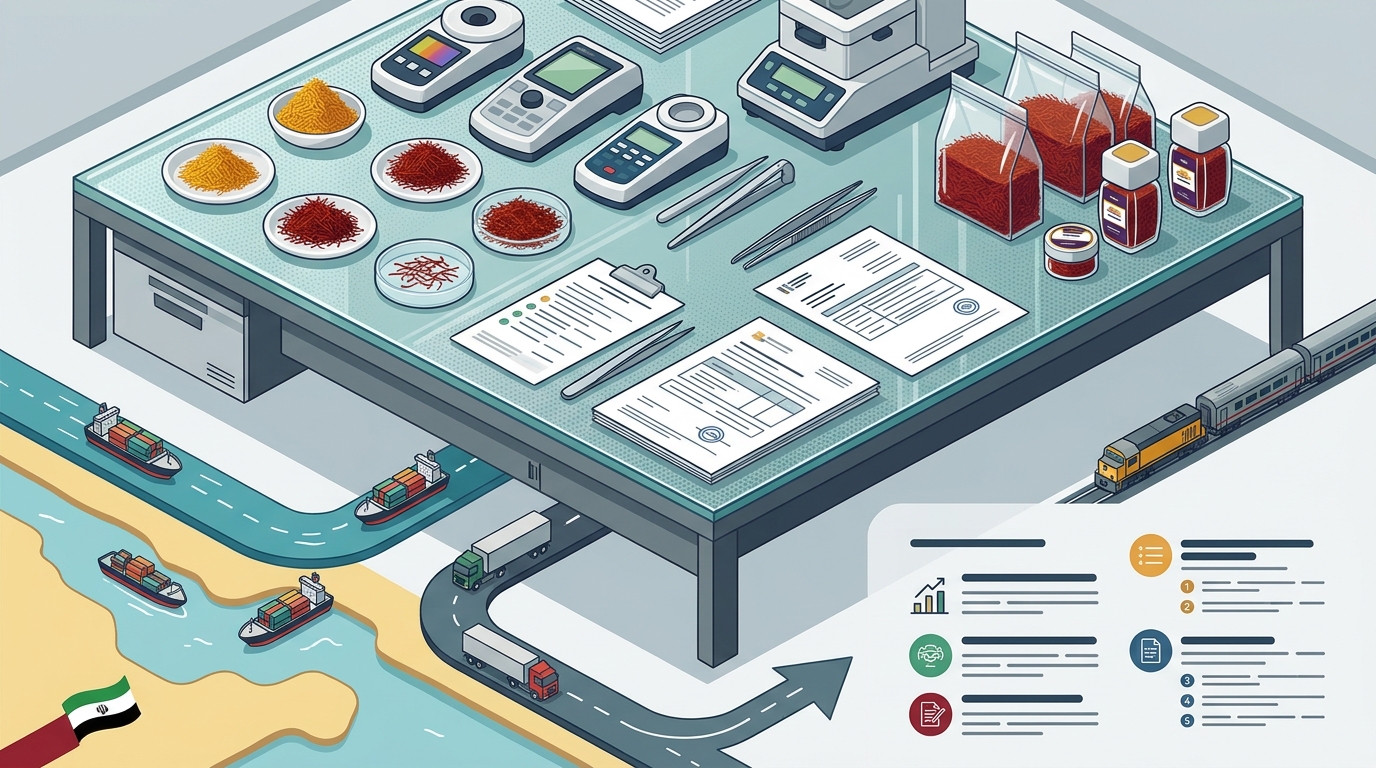
One of the primary challenges in the spice trade is maintaining uniform quality across different harvests. A long-term supplier mitigates this risk by establishing a documented quality management system. Raiva Food controls quality at every stage, from selecting and grading at harvest to sorting and cleaning before packing. This systematic approach ensures that the product arriving at the destination matches the agreed-upon specifications.
For importers, this consistency translates into fewer rejected shipments and less need for on-site re-sorting. When a supplier is working toward ISO 9001 certification, it signals a commitment to formalizing these quality checks into a documented system. This reduces the variability that often plagues short-term, spot-market transactions where quality can fluctuate significantly between batches.
Logistics Reliability and Route Flexibility
The ability to switch between these modes based on market demand or logistical constraints helps importers avoid stockouts. For example, during peak retail seasons, the overland route may be prioritized to ensure rapid delivery, while sea freight handles bulk inventory replenishment. This strategic flexibility is a tangible outcome of a mature export partnership.
Documentation Efficiency and Customs Clearance
Customs clearance in the GCC requires precise documentation, including phytosanitary certificates, health certificates, and certificates of origin. A long-term supplier that issues these documents per shipment streamlines the import process. Raiva Food provides the necessary export documents for each shipment, ensuring that the agreed grade and specification are restated in writing on the proforma invoice before payment.
This pre-shipment verification reduces the risk of disputes at the border. Importers can verify that the documentation matches the physical goods before the shipment arrives. This efficiency saves time and reduces the administrative burden on the importer's logistics team, allowing them to focus on distribution and sales rather than paperwork resolution.
Product Portfolio Depth and Diversification
Long-term partnerships often lead to portfolio diversification. Raiva Food offers a wide range of products, including Persian saffron, dried Damask rose, dates, and fresh produce. For GCC importers, this depth allows for the consolidation of shipments. Instead of managing multiple suppliers for different botanicals, a single supplier can provide a mixed pallet load or full container of complementary products.
This consolidation reduces per-unit shipping costs and simplifies inventory management. For instance, an importer specializing in gourmet retail can source saffron and rose water from the same supplier, ensuring consistent branding and quality across their product lines. The availability of current analysis documents for the specific lot being quoted further supports this diversification by providing transparency on each product's composition.
Strategic Partnership and Market Adaptation
Over time, a supplier becomes more attuned to the specific needs of the GCC market. Raiva Food, with offices in both Yazd, Iran, and Muscat, Oman, has direct access to the regional market dynamics. This proximity allows for faster communication and quicker adaptation to changing consumer preferences or regulatory requirements. The supplier can provide insights into seasonal availability and market trends that are specific to the region.
This strategic alignment enables importers to plan their procurement more effectively. By understanding the supplier's seasonal calendars and production cycles, importers can optimize their inventory levels and reduce holding costs. The long-term relationship fosters a level of trust and transparency that is difficult to achieve with short-term transactions, ultimately leading to more predictable and profitable operations.
Key Takeaways
- Consistent grading and quality control reduce rejected shipments and re-sorting costs.
- Dual logistics routes (sea and overland) provide flexibility in transit times and costs.
- Streamlined documentation and pre-shipment verification accelerate customs clearance.
- Portfolio depth allows for shipment consolidation and simplified inventory management.
Frequently Asked Questions
How does a long-term supplier improve quality consistency?
Long-term suppliers implement documented quality management systems that standardize grading and sorting processes, reducing variability between batches.
What logistics options are available for GCC importers?
Importers can utilize sea freight from Bandar Abbas for bulk loads and overland routes by truck and rail for faster transit or urgent needs.
How does documentation streamline customs clearance?
Pre-shipment verification of specifications on the proforma invoice and the provision of required certificates reduce the risk of disputes at the border.
Can importers consolidate shipments with multiple products?
Yes, suppliers with a deep product portfolio allow for mixed pallet loads or full containers of complementary products, reducing per-unit shipping costs.
What is the benefit of regional supplier proximity?
Proximity to the GCC market allows for faster communication, quicker adaptation to regulatory changes, and better insight into local market trends.
Conclusion
Building a long-term relationship with a specialized exporter like Raiva Food offers GCC importers measurable benefits in quality, logistics, and operational efficiency. By leveraging dual routes, standardized documentation, and a deep product portfolio, businesses can achieve stable and predictable supply chains. To explore how a long-term partnership can benefit your import operations, request a quote today.