Key Considerations for Iranian Vegetable Exporters Shipping to Neighboring Countries
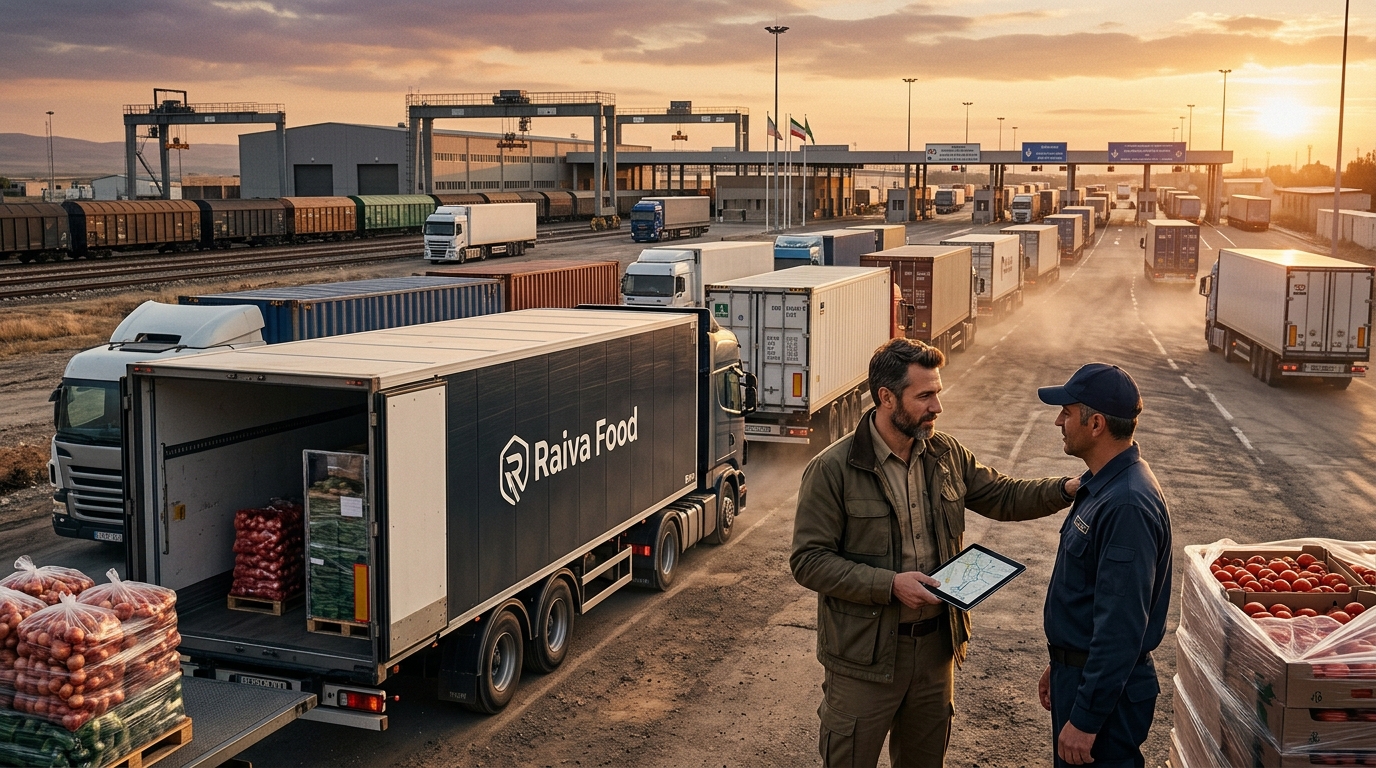
When shipping fresh produce to neighboring countries, exporters must prioritize rapid transit, strict cold chain management, and accurate customs documentation. Raiva Food, an Iranian exporter operating since 2010, manages these logistics through overland truck and rail routes. This approach minimizes transit time and preserves the quality of perishable goods like tomatoes, cucumbers, and onions for regional markets.
Overland Logistics and Transit Efficiency
Overland transport is the primary method for moving fresh vegetables from Iran to neighboring markets. Raiva Food utilizes truck and rail networks crossing Iran's land borders to deliver goods efficiently. This method is critical for maintaining the freshness of high-moisture crops. For example, greenhouse-grown bell peppers and field-grown cucumbers require minimal transit time to remain viable for retail sale. The proximity of regional markets allows for same-week delivery, which is a significant advantage over long-haul sea freight.
Cold Chain Integrity and Quality Control
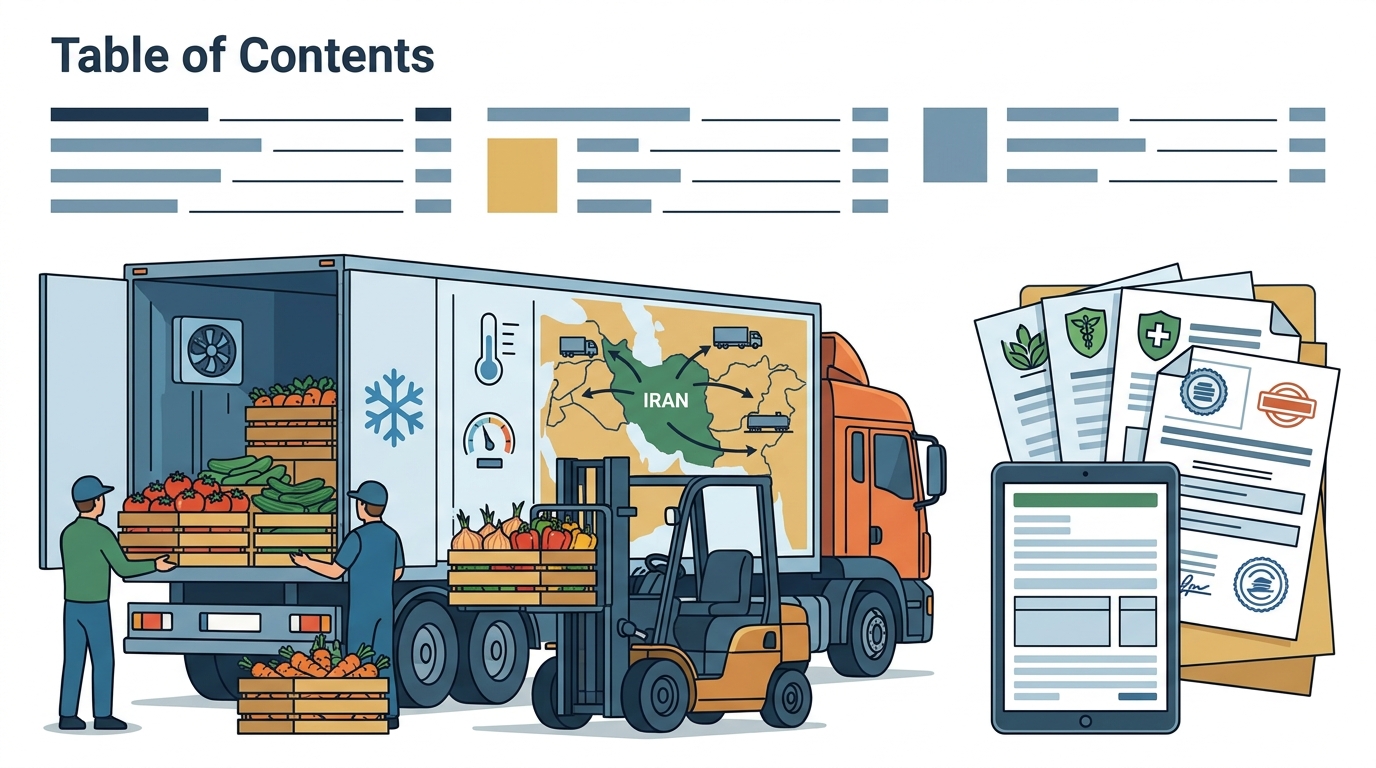
Cold chain integrity is the defining factor in the success of fresh vegetable exports. A continuous temperature-controlled environment prevents spoilage and maintains the structural integrity of the produce. Raiva Food controls quality at every stage, from selecting and grading at harvest to inspecting before loading. This rigorous process ensures that items like cabbage and cauliflower arrive in the condition required by destination markets. The use of single-layer crates and specific pallet configurations further protects the produce during transit.
Customs Documentation and Compliance
Accurate documentation is essential for clearing customs in neighboring countries. Exporters must provide a phytosanitary certificate, a health certificate, and a certificate of origin where required. These documents verify that the produce meets the agricultural and safety standards of the importing nation. Raiva Food issues these export documents per shipment to ensure smooth clearance. The agreed grade and specification are restated in writing on the proforma invoice, providing a clear reference for both the buyer and customs authorities.
Product Lines and Market Fit
Iranian vegetable exporters offer a diverse range of fresh produce suited to regional culinary preferences. The product line includes tomatoes, bell peppers, cucumbers, onions, potatoes, and leafy greens. Each product is graded by size and color to meet specific retail or food-service requirements. For instance, carrots are washed and graded by diameter, while eggplants are graded by weight. This level of standardization allows importers to source consistent quality for their operations.
Building B2B Partnerships
Successful exports rely on strong business-to-business partnerships with importers and distributors. Raiva Food works with qualified staff to fulfill a genuine commitment to clients. The company supplies to importers, wholesale distributors, retail chains, and food manufacturers. By focusing on B2B sales by the container or mixed pallet load, exporters can provide the volume and consistency that large-scale buyers require. This approach fosters long-term relationships and ensures a stable supply chain for regional markets.
Key Takeaways
- Overland truck and rail routes are the most efficient methods for shipping fresh vegetables to neighboring countries.
- Strict cold chain management is essential to preserve the quality and shelf life of perishable produce.
- Accurate customs documentation, including phytosanitary and health certificates, is required for smooth border clearance.
- Product grading by size, color, and weight ensures consistency for retail and food-service buyers.
- B2B partnerships with importers and distributors provide the volume and stability needed for successful exports.
- Pre-shipment inspections and written specifications on proforma invoices reduce the risk of disputes.
Frequently Asked Questions
What is the primary mode of transport for Iranian vegetable exports to neighbors?
How does Raiva Food ensure the quality of its vegetable exports?
Quality is controlled at every stage, including harvest grading, pre-packing sorting, and pre-loading inspection, with a focus on cold chain integrity.
What documents are required for shipping vegetables to neighboring countries?
Required documents typically include a phytosanitary certificate, a health certificate, and a certificate of origin, depending on the destination.
Does Raiva Food sell vegetables in retail quantities?
No, Raiva Food focuses on business-to-business sales, supplying by the container or mixed pallet load to importers and distributors.
What types of vegetables does Raiva Food export?
The company exports a wide range of fresh vegetables, including tomatoes, bell peppers, cucumbers, onions, potatoes, and leafy greens.