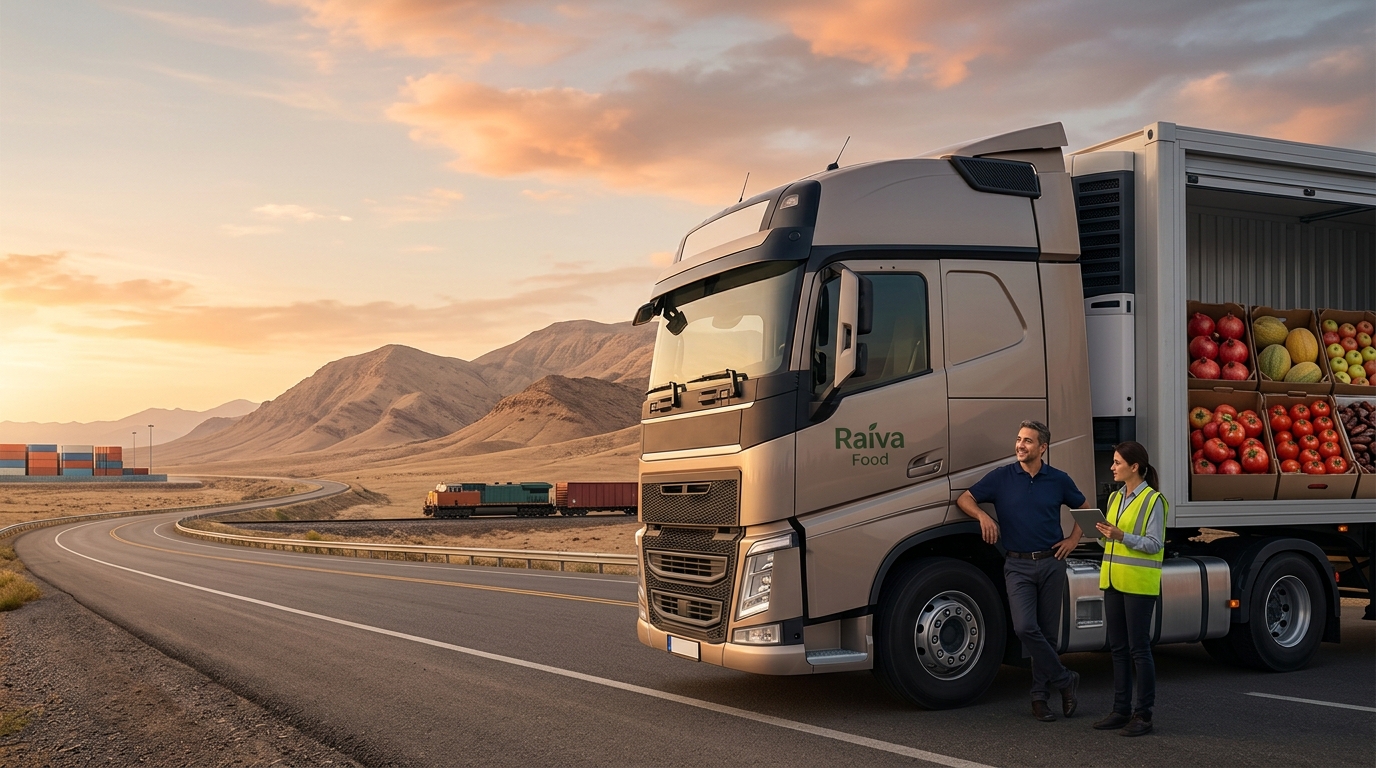
Suppliers shipping fresh fruit and vegetables from Iran to Kazakhstan, Uzbekistan, and Turkmenistan primarily use overland truck and rail routes. Raiva Food, an exporter operating since 2010, facilitates these shipments by coordinating logistics from Bandar Abbas and utilizing Iran's land borders. This guide covers how to select reliable suppliers, verify credentials, understand costs, and navigate the specific regulatory and seasonal factors of the Central Asian market.
How to Choose a Supplier
Selecting a supplier for fresh produce requires looking beyond price to operational stability and quality control. A reliable exporter must demonstrate consistent access to high-quality agricultural regions and the logistical capability to handle perishable goods. Raiva Food operates from offices in Yazd, Iran, and Muscat, Oman, providing a dual-hub structure that supports both domestic sourcing and international coordination.
Operational Stability
Stability is defined by the length of time a company has been active in the export sector. Raiva Food has been exporting since 2010, which indicates a track record of navigating changing trade environments. Buyers should prioritize suppliers who have maintained operations through various market cycles, as this suggests resilience in supply chain management.
Quality Control Infrastructure
Quality control is the systematic process of inspecting and grading produce to meet specific standards. For fresh fruit and vegetables, this involves checking for size, color, and absence of defects before packing. Suppliers should be able to describe their grading process, such as sorting and cleaning before packing, and their inspection protocols before loading.
What to Ask Before Committing
Before finalizing a contract, buyers must ask specific questions that reveal the supplier's operational depth. Vague answers often indicate a lack of direct control over the supply chain. The following questions help distinguish between a primary exporter and a middleman.
- Where is the produce grown? Knowing the specific growing region helps assess quality consistency and seasonal availability.
- What is the minimum order quantity? Raiva Food typically requires a minimum of one 40ft reefer container (20 MT) for fresh lines, ensuring the shipment is economically viable for both parties.
- What documentation is provided? Ask for a sample proforma invoice and a list of export documents, such as phytosanitary certificates and certificates of origin.
- How is the specification confirmed? Reliable suppliers restate the agreed grade and specification in writing on the proforma invoice before payment.
How to Verify Claims and Credentials
Verification is the act of confirming that a supplier's claims about their products and processes are accurate. In the fresh produce industry, buyers should request current analysis documents for the specific lot being quoted. This ensures that the moisture content, size, and grade match the contract terms.
Document Verification
Buyers should verify that the supplier provides certification documents that are valid on the shipment date. Raiva Food provides current certification and analysis documents directly to buyers as part of the quotation process. This practice prevents the use of expired or generic scans that may not reflect the actual product being shipped.
Third-Party Inspection
Pre-shipment inspection is a service where an independent agency checks the goods before they leave the origin country. Buyers can nominate their own inspection agency to verify the quality and quantity of the produce. This adds a layer of protection and ensures that the goods meet the agreed specifications before the container is sealed.
How the Logistics Process Works
The logistics process for shipping fresh produce from Iran to Central Asia involves several distinct stages. Understanding this sequence helps buyers anticipate timelines and potential bottlenecks. The process typically moves from sourcing to packing, inspection, and finally transport.
Sourcing and Packing
Produce is selected at harvest and graded before it reaches the packing line. For fresh vegetables like cucumbers and tomatoes, this involves sorting to the agreed grade and packing into 10 kg cartons. The packing format is crucial for maintaining freshness during transit.
Transport Modes
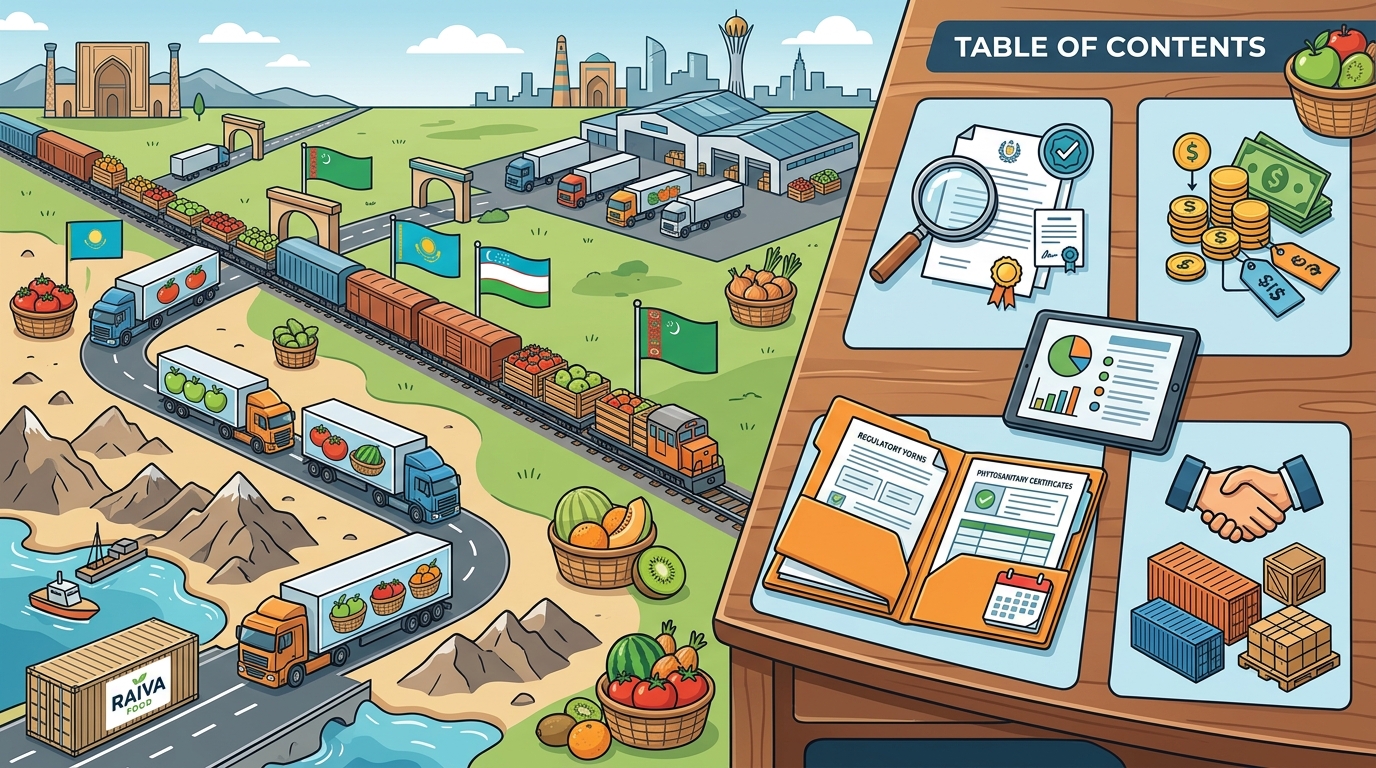
Transport is the movement of goods from the origin to the destination. Raiva Food ships by sea from Bandar Abbas and overland through Iran's land borders. For Central Asian destinations like Kazakhstan and Uzbekistan, overland truck and rail are the primary modes. These routes are generally faster than sea freight and are better suited for perishable goods that require a shorter transit time.
What Drives the Cost
Cost is the total amount paid for the goods and their delivery. In the fresh produce export industry, price is quoted per enquiry because it depends on several variable factors. Understanding these drivers helps buyers negotiate better terms and avoid unexpected costs.
Key Cost Drivers
- Grade and Quality: Higher grades with stricter size and color requirements typically cost more due to the labor involved in sorting.
- Packing Format: The type of packaging, such as 10 kg cartons or palletized loads, affects the cost and the container loadability.
- Destination and Route: The distance and mode of transport (truck vs. rail) significantly impact the final price. Overland routes to Central Asia may have different cost structures compared to sea freight to Europe.
- Seasonality: Prices may fluctuate based on the harvest season and supply availability. Off-season shipments may require cold storage, which adds to the cost.
Common Mistakes and How to Avoid Them
Buyers often make mistakes that lead to quality issues or financial losses. Being aware of these common pitfalls can help mitigate risks. The most frequent errors involve unclear specifications and inadequate documentation.
Unclear Specifications
Failing to define the exact grade, size, and moisture content in the contract is a major risk. Buyers should ensure that the specification is restated in writing on the proforma invoice. This creates a legal reference point for any disputes regarding quality.
Inadequate Documentation
Missing or incorrect export documents can cause delays at customs. Buyers should confirm which documents accompany the shipment, such as the phytosanitary certificate and health certificate. Raiva Food prepares export documentation per shipment and confirms it on the proforma invoice, ensuring that all necessary paperwork is in order.
Overland vs. Sea Freight Alternatives
Choosing between overland and sea freight depends on the destination and the perishability of the goods. Overland routes are generally faster and more suitable for fresh produce destined for neighboring regions like Central Asia. Sea freight is often used for longer distances, such as shipments to Europe or the Americas.
| Feature | Overland (Truck/Rail) | Sea Freight |
|---|---|---|
| Transit Time | Faster (days to weeks) | Slower (weeks to months) |
| Perishability Suitability | High (shorter transit) | Lower (requires extended cold storage) |
| Cost | Variable based on route | Often lower for long distances |
| Typical Destinations | Central Asia, Middle East | Europe, Americas, Asia |
Considerations for Specific Situations
Different buyer types have different needs when importing fresh produce. Understanding these specific situations helps tailor the sourcing strategy. The primary buyers for Raiva Food include importers, wholesale distributors, retail chains, and food manufacturers.
Wholesale Distributors
Food Manufacturers
Food manufacturers, such as juice and processing plants, require produce that meets specific industrial standards. They may need larger volumes and consistent quality for their production lines. Raiva Food supplies produce that is suitable for both fresh retail and processing markets, ensuring that the goods meet the requirements of industrial buyers.
Rules and Buyer Protections
Buyer protections are the mechanisms that safeguard the interests of the importer in a trade transaction. These include contractual agreements, documentation, and inspection rights. Understanding these protections helps buyers manage risk and ensure that they receive the goods as agreed.
Contractual Protections
The sales contract is the primary legal document that governs the transaction. It should clearly state the product, quantity, price, terms of payment, and delivery terms. Raiva Food issues a proforma invoice that covers goods, packing, terms, and the documents included, providing a clear reference for the buyer.
Inspection Rights
Buyers have the right to conduct pre-shipment inspections through their nominated agency. This allows them to verify the quality and quantity of the goods before they are shipped. If the goods do not meet the agreed specifications, the buyer can request corrections or reject the shipment, depending on the terms of the contract.
Local Specifics for Central Asia
Shipping to Central Asia involves specific logistical and regulatory considerations. The region includes countries like Kazakhstan, Uzbekistan, and Turkmenistan, which are landlocked and rely on overland routes for imports from Iran. Understanding these local specifics is crucial for successful trade.
Logistical Routes
Regulatory Requirements
Each country in Central Asia has its own import regulations and documentation requirements. Buyers should confirm the specific requirements for their destination market, such as the need for a phytosanitary certificate or a health certificate. Raiva Food prepares export documentation per shipment and confirms which documents accompany the destination market, ensuring compliance with local regulations.
Timing and Seasonal Availability
Timing is a critical factor in the fresh produce trade. The availability of specific products depends on the harvest season and the growing region. Buyers should plan their shipping windows around the seasonal availability of the products they wish to import.
Seasonal Calendar
Seasonality is the pattern of availability of agricultural products throughout the year. Raiva Food provides a seasonal availability calendar for fresh lines, indicating when each product is in season for export from Iran. For example, kiwi is available from October to May, while watermelon is available from April to September. Planning shipments around these windows ensures access to fresh, high-quality produce.
Cold Storage
Cold storage is the preservation of perishable goods in a controlled temperature environment. For products that are out of season, cold storage can extend their availability. Raiva Food offers cold-store availability for certain fresh lines, allowing buyers to access products outside their natural harvest window. However, buyers should confirm the shipping window with the export desk before contracting, as seasons can shift year to year with weather and growing region.
Long-Term Results and Expectations
Building a long-term relationship with a supplier can lead to consistent quality and reliable supply. Buyers who work with established exporters like Raiva Food can expect a high level of service and support. The company's commitment to quality and value-added service ensures that buyers receive the finest quality products.
Consistency and Reliability
Consistency is the ability to deliver the same quality and quantity of goods over time. A reliable supplier will maintain consistent standards across multiple shipments, building trust with the buyer. Raiva Food's long-standing presence in the export sector since 2010 demonstrates its commitment to consistency and reliability.
Value-Added Services
Value-added services are additional services that enhance the value of the product for the buyer. These can include custom packing, labeling, and documentation support. Raiva Food provides value-added services such as pre-shipment inspection and current analysis documents, ensuring that buyers receive a comprehensive and hassle-free experience.
Key Takeaways
- Choose suppliers with a proven track record and operational stability, such as Raiva Food, which has been exporting since 2010.
- Ask specific questions about growing regions, minimum order quantities, and documentation to verify the supplier's capabilities.
- Verify claims by requesting current analysis documents and conducting pre-shipment inspections through a nominated agency.
- Understand the logistics process, including sourcing, packing, and transport modes, to anticipate timelines and potential issues.
- Recognize that cost is driven by grade, packing, destination, and seasonality, and negotiate terms accordingly.
- Avoid common mistakes such as unclear specifications and inadequate documentation by ensuring all details are restated in writing on the proforma invoice.
- Consider the specific needs of your business, whether you are a wholesale distributor or a food manufacturer, when selecting a supplier.
- Plan shipments around seasonal availability and utilize cold storage for off-season products to ensure consistent supply.
Frequently Asked Questions
What is the minimum order quantity for fresh produce from Raiva Food?
The minimum order quantity for fresh fruit and vegetables is typically one 40ft reefer container (20 MT). This ensures that the shipment is economically viable for both the supplier and the buyer.
How does Raiva Food ship to Central Asia?
Raiva Food ships to Central Asia by overland truck and rail through Iran's land borders. These routes are faster than sea freight and are well-suited for perishable goods.
What documentation is provided with the shipment?
Raiva Food provides export documentation per shipment, including a phytosanitary certificate, health certificate, and certificate of origin where the destination requires them. The specific documents are confirmed on the proforma invoice.
Can I request a pre-shipment inspection?
Yes, pre-shipment inspection is available through the buyer's nominated inspection agency. This allows the buyer to verify the quality and quantity of the goods before they are shipped.
How is the price determined?
Price is quoted per enquiry because it depends on grade, packing, and destination. Buyers should send their volume and destination country to receive a quotation and a proforma invoice.
What is the seasonal availability of kiwi from Iran?
Kiwi is available for export from Iran from October to May. Fresh harvest occurs from October to December, with cold-store availability from January to May.
Does Raiva Food sell retail quantities?
No, Raiva Food does not sell retail quantities. Sales are business-to-business, by the container or mixed pallet load, catering to importers, wholesale distributors, and food manufacturers.
Conclusion
Shipping fresh fruit and vegetables from Iran to Central Asia requires a careful selection of suppliers and a thorough understanding of the logistical and regulatory landscape. Raiva Food offers a reliable solution for importers, wholesale distributors, and food manufacturers, providing high-quality produce and comprehensive support. By following the guidelines outlined in this article, buyers can make informed decisions and build successful long-term partnerships. To discuss your requirements, request a quote from Raiva Food's export team.