
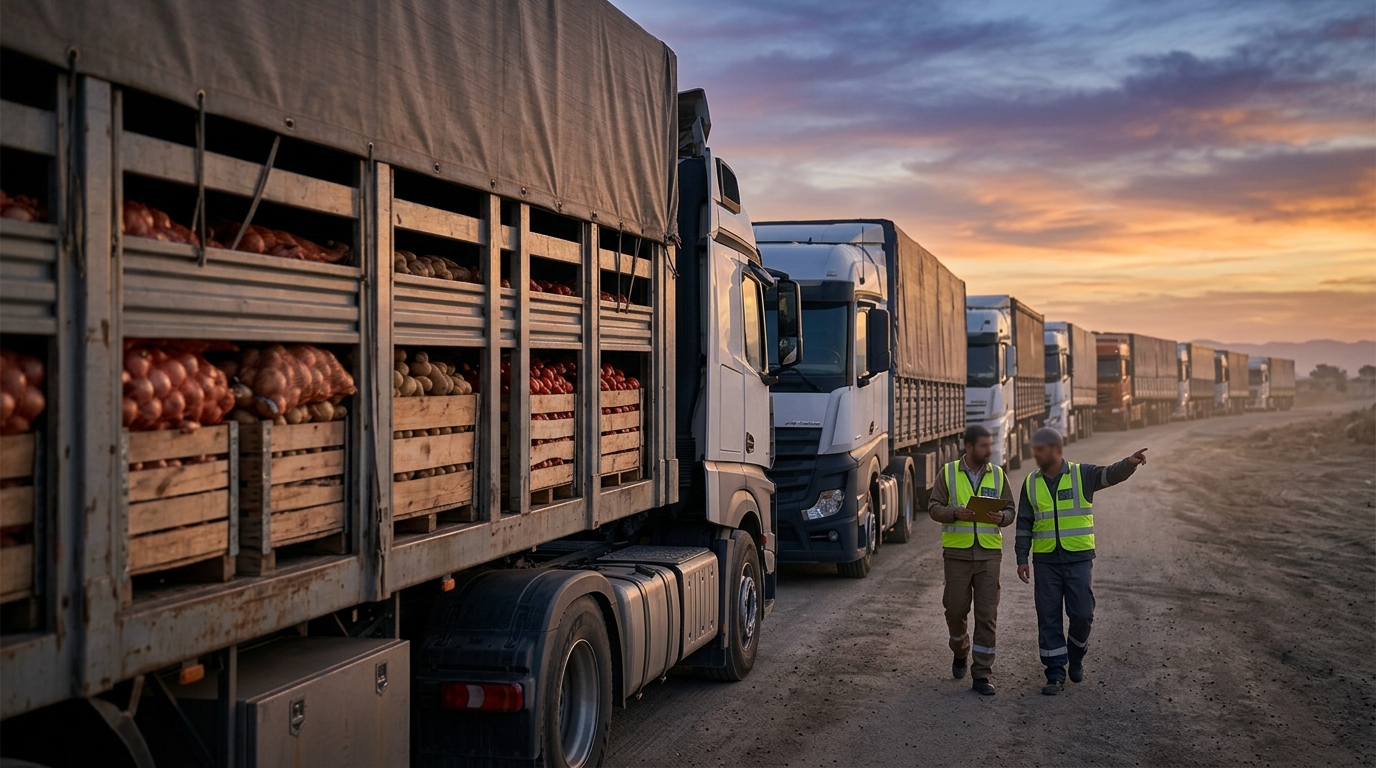
Shipping Onions, Potatoes & Tomatoes from Iran to Iraq, Afghanistan & Pakistan
Iranian exporters deliver onions, potatoes, and tomatoes to Iraq, Afghanistan, and Pakistan primarily via overland trucking through Iran's land borders. This guide explains how logistics work, which exporters to consider, and how to verify quality before you pay.
Iranian Vegetable Exporters
Iran is a major global producer of fresh vegetables, with specific regions specializing in onions, potatoes, and tomatoes. When sourcing from Iranian exporters, it is critical to understand the difference between general agricultural traders and specialized food exporters who manage the entire supply chain from harvest to border.
Specialized vs. General Exporters
Many traders in Iran sell agricultural commodities, but not all have the infrastructure to handle perishable fresh produce. A specialized exporter manages grading, packing, and cold-chain logistics. For example, Raiva Food has been exporting from Iran since 2010, focusing on high-quality fresh and dried produce. They operate from offices in Yazd, Iran, and Muscat, Oman, allowing for better coordination of overland routes.
Verifying Exporter Credentials
Before contracting, verify that an exporter holds the necessary phytosanitary certificates and health certificates. These documents are mandatory for crossing borders into Iraq, Afghanistan, and Pakistan. Reputable exporters will provide these documents per shipment and restate the agreed specifications on the proforma invoice. This written confirmation protects the buyer from receiving goods that do not match the contracted grade.
Minimum Order Quantities
Most Iranian exporters sell by the container or mixed pallet load. For fresh vegetables like onions and tomatoes, the minimum order is typically one 40ft reefer container, which holds approximately 20 metric tons. This volume is suitable for wholesale distribution in destination markets. Buyers should confirm if the exporter offers mixed loads, which can be useful for testing a new supplier before committing to full containers.
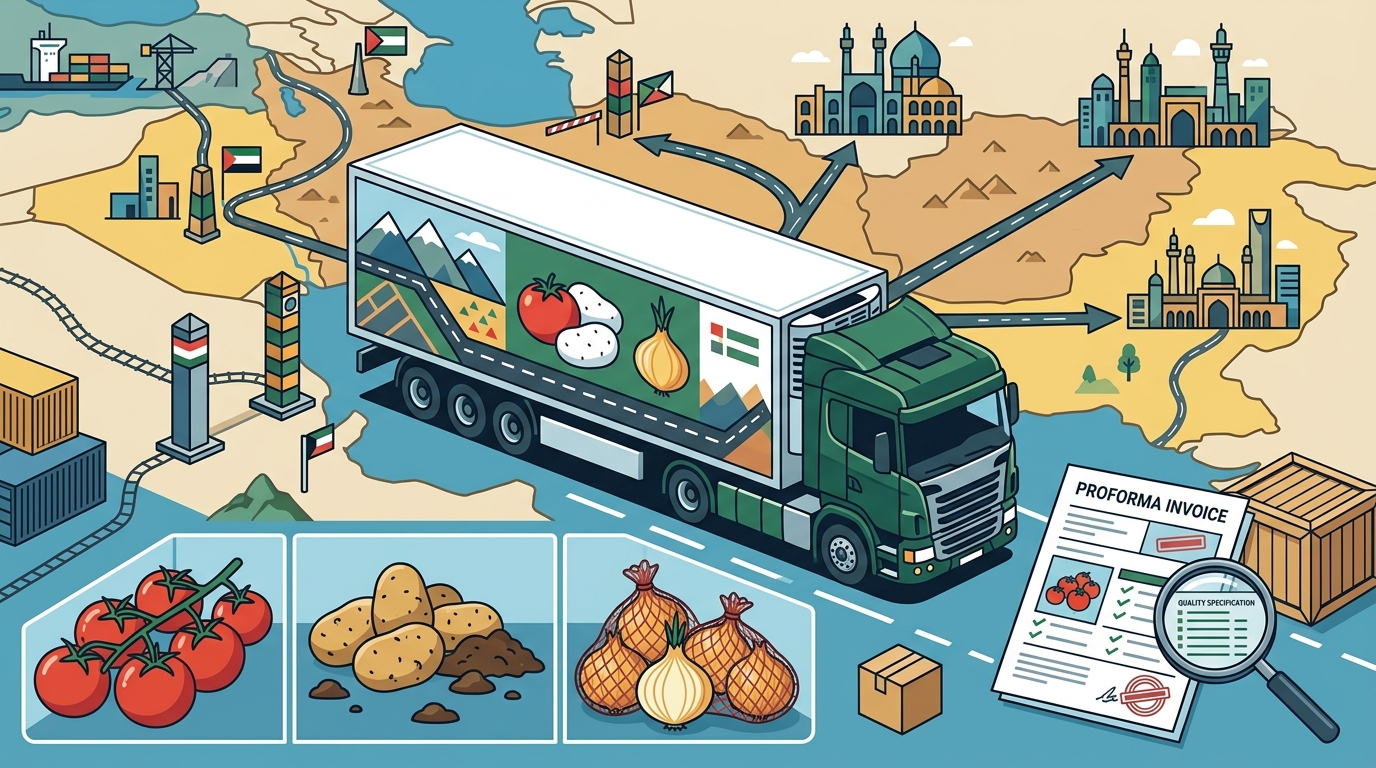
Onion, Potato & Tomato Export Logistics
Logistics for shipping fresh vegetables from Iran to neighboring countries rely heavily on overland trucking. The route, transport temperature, and documentation requirements vary by destination and product type.
Overland Trucking Routes
Trucks depart from Iranian border crossings and travel directly to destination markets. For Iraq, the route typically goes through the Shalamcheh or Basra borders. For Afghanistan, trucks cross through the Nimroz or Herat borders. For Pakistan, the route goes through the Torkham or Chaman borders. These routes are well-established and can handle high volumes of perishable goods. Sea freight from Bandar Abbas is an option for distant markets, but overland trucking is faster and more cost-effective for Iraq, Afghanistan, and Pakistan.
Temperature and Humidity Control
Each vegetable requires specific transport conditions to maintain freshness. Onions are transported at -1°C to 0°C with 60-70% relative humidity. Potatoes require similar cold storage conditions. Tomatoes are more sensitive and are transported at +8°C to +12°C with 85-90% relative humidity. Using a reefer container with precise temperature control is essential to prevent spoilage during transit. The shelf life in transit for onions is 3-6 weeks, while tomatoes last 2-3 weeks under optimal conditions.
Documentation and Customs
Customs clearance in Iraq, Afghanistan, and Pakistan requires specific documents. The phytosanitary certificate, issued by Iranian agricultural authorities, confirms the produce is free from pests. The health certificate, issued by health authorities, confirms the produce is safe for human consumption. The certificate of origin proves the goods are from Iran. Exporters like Raiva Food prepare these documents per shipment and confirm them on the proforma invoice. Buyers should verify that the HS codes on the documents match the 6-digit World Customs Organization headings for the specific product.
| Product | HS Code | Transport Temp | Humidity | Shelf Life in Transit | Typical Route |
|---|---|---|---|---|---|
| Yellow Onion | 0703.10 | -1°C to 0°C | 60-70% | 3-6 weeks | Overland truck |
| White Onion | 0703.10 | -1°C to 0°C | 60-70% | 3-6 weeks | Overland truck |
| Red Onion | 0703.10 | -1°C to 0°C | 60-70% | 3-6 weeks | Overland truck |
| Potato | 0701.00 | -1°C to 0°C | 60-70% | 3-6 weeks | Overland truck |
| Tomato | 0702.00 | +8°C to +12°C | 85-90% | 2-3 weeks | Overland truck |
Key Takeaways
- Overland trucking is the primary method for shipping onions, potatoes, and tomatoes from Iran to Iraq, Afghanistan, and Pakistan.
- Specialized exporters manage the entire supply chain, including grading, packing, and cold-chain logistics.
- Verify that the exporter provides phytosanitary, health, and certificate of origin documents per shipment.
- Minimum order quantities are typically one 40ft reefer container, holding approximately 20 metric tons.
- Temperature and humidity control are critical for maintaining freshness during transit.
- HS codes on documents must match the 6-digit World Customs Organization headings for the specific product.
- Reputable exporters restate agreed specifications on the proforma invoice before payment.
- Sea freight from Bandar Abbas is an option for distant markets, but overland is faster for neighboring countries.
Frequently Asked Questions
What is the minimum order quantity for fresh vegetables from Iran?
The minimum order quantity is typically one 40ft reefer container, which holds approximately 20 metric tons. Some exporters may offer mixed pallet loads for smaller orders, but full containers are the standard for wholesale distribution.