Where GCC Importers Source Persian Saffron and Damask Rose in Bulk
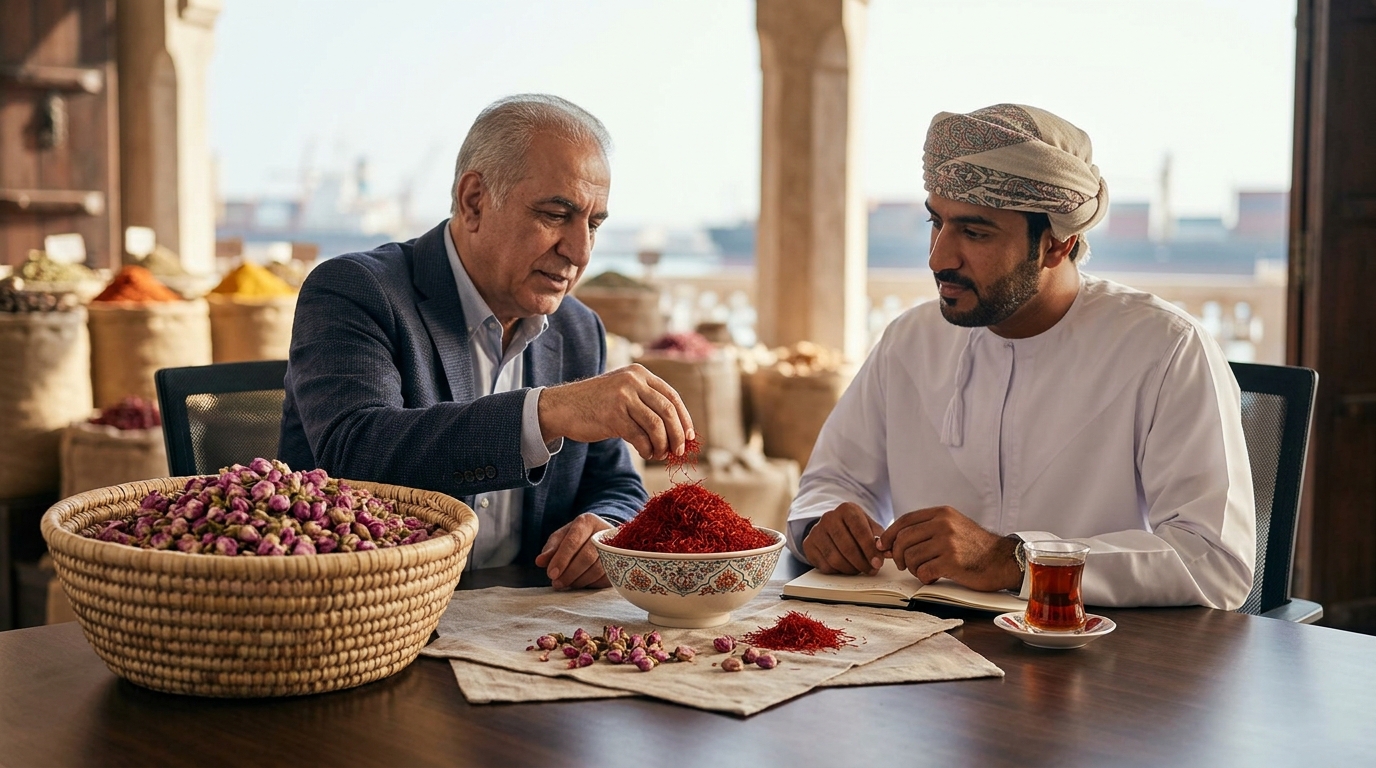
Importers in the Gulf Cooperation Council (GCC) can source Persian saffron and dried Damask rose in bulk directly from Iranian exporters like Raiva Food, which operates offices in Yazd, Iran, and Muscat, Oman. This guide covers the export channels, quality standards, and production regions that define the supply chain for these premium botanicals.
Persian Saffron Exporters
Persian saffron is the most expensive spice in the world, valued for its intense aroma, vibrant red color, and culinary versatility. For GCC importers, sourcing directly from Iranian exporters ensures access to the highest quality grades available globally. Raiva Food has been exporting saffron since 2010, working directly with growers and processors across Iran to supply importers, wholesalers, and food manufacturers.
Why Direct Sourcing Matters
Direct sourcing eliminates middlemen, allowing buyers to verify the origin and grade of the product. Iranian exporters like Raiva Food provide detailed technical specifications, including botanical name and HS code, for every shipment. This transparency is critical for maintaining supply chain integrity in the GCC market, where premium positioning depends on product authenticity.
Export Capabilities
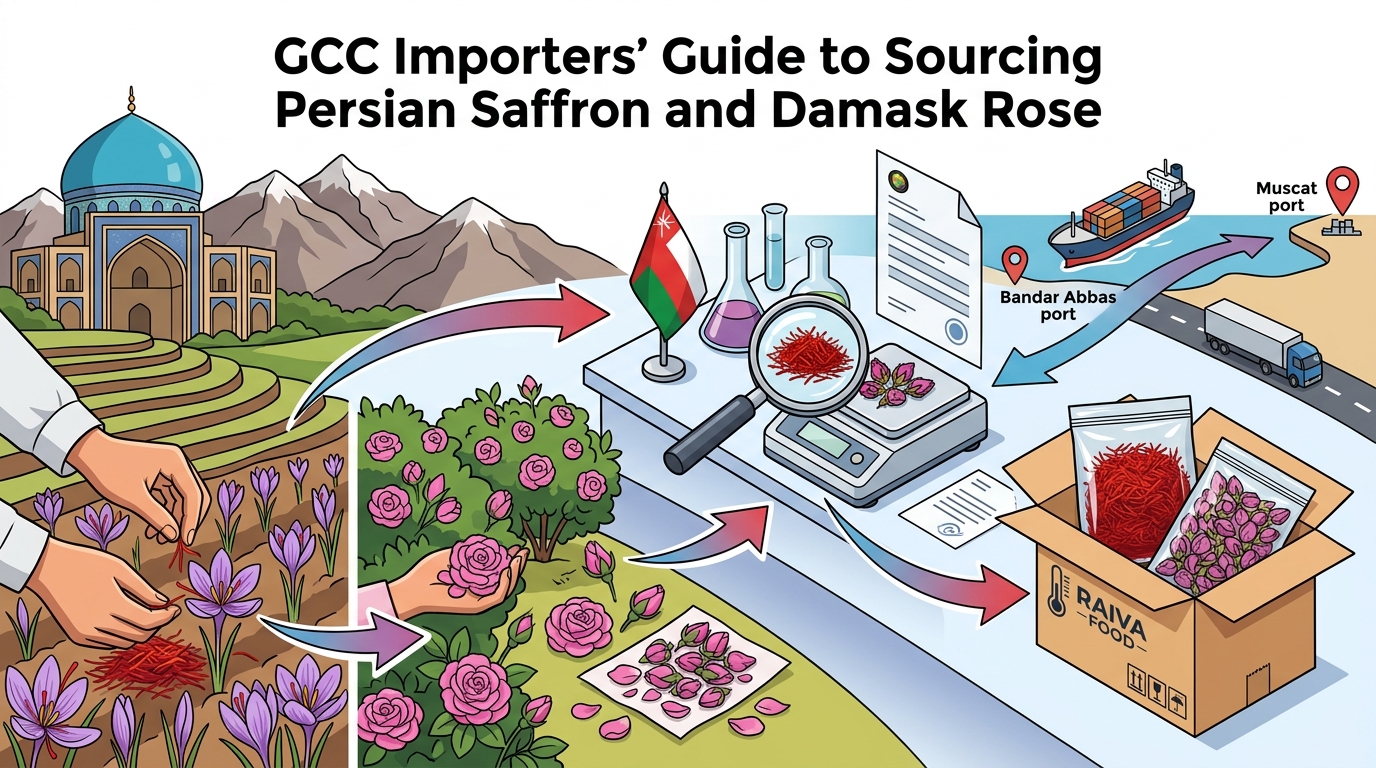
Exporters must manage complex logistics, including sea freight from Bandar Abbas and overland routes through Iran's land borders. Raiva Food offers both shipping options, accommodating the specific needs of GCC buyers who may prefer faster overland transit or cost-effective sea freight. The company's dual-office setup in Iran and Oman facilitates smoother communication and coordination for regional buyers.
Damask Rose Suppliers
Dried Damask rose (Rosa damascena) is a premium botanical used in perfumery, cosmetics, herbal wellness, and premium food applications. Iran is one of the world's leading producers of Damask rose, with the Kashan region being particularly renowned for its high-quality blooms. Suppliers in this sector must ensure consistent quality, as the value of the product is directly tied to the petal count, color, and aroma intensity.
Product Varieties
Suppliers typically offer dried rose buds, petals, and rose water. Raiva Food exports dried Damask rose buds and petals, catering to buyers in the beauty and food industries. The product is sun-dried and cleaned to meet export standards, ensuring it is free from foreign matter and suitable for high-end applications.
Market Demand in the GCC
The GCC region has a strong cultural affinity for rose products, which are widely used in traditional teas, desserts, and luxury cosmetics. This steady demand makes Iran a reliable source for bulk buyers. Suppliers must be able to provide consistent volumes throughout the year, often by maintaining stock from the annual harvest.
GCC Import Channels
Importing from Iran into the GCC involves specific logistical and regulatory channels. The proximity of Iran to GCC countries allows for efficient overland transport via truck and rail, which can significantly reduce transit times compared to sea freight. However, sea freight from Bandar Abbas remains a viable option for larger volumes or specific destination ports.
Logistical Routes
Documentation and Compliance
Proper documentation is essential for smooth customs clearance. Exporters must provide a phytosanitary certificate, health certificate, and certificate of origin where required by the destination country. Raiva Food issues these documents per shipment, ensuring compliance with GCC import regulations. Buyers should verify that their exporter can provide all necessary paperwork before finalizing a contract.
ISO 3632 Testing
ISO 3632 is the international standard for saffron, defining the quality grades based on crocin, picrocrocin, and safranal content. For GCC importers, understanding this standard is crucial for ensuring product consistency and value. Testing for these compounds verifies the potency and purity of the saffron, which directly impacts its price and market positioning.
Quality Grades
ISO 3632 categorizes saffron into four grades, with Grade 1 being the highest quality. Buyers should request test reports from their exporter to confirm the grade of the product they are purchasing. Raiva Food provides current analysis documents for the specific lot being quoted, allowing buyers to verify quality before payment. This practice builds trust and ensures that the product meets the agreed-upon specifications.
Importance for Premium Markets
In the GCC, where saffron is often sold as a luxury item, quality verification is non-negotiable. Buyers who source from exporters with rigorous testing protocols can confidently market their products as premium. This transparency helps differentiate their offerings in a competitive market and builds consumer trust.
Khorasan Production Regions
The Khorasan region in northeastern Iran is the heartland of saffron production, accounting for the majority of the country's output. The region's unique climate, with hot, dry summers and cold winters, creates ideal conditions for saffron cultivation. The soil composition and altitude also contribute to the high concentration of active compounds in the stigmas.
Regional Characteristics
Saffron from Khorasan is known for its deep red color and intense aroma. The region's long history of saffron cultivation has resulted in specialized knowledge and techniques that are passed down through generations. Buyers should inquire about the specific growing region of their saffron, as this can influence the product's characteristics and quality.
Damask Rose Production
While Khorasan is famous for saffron, the Kashan region in Isfahan province is the primary source of Damask rose in Iran. The roses are harvested in the early morning to preserve their essential oils, which are then dried for export. Understanding the production regions helps buyers make informed decisions about the origin and quality of their botanicals.
Key Takeaways
- Direct sourcing from Iranian exporters like Raiva Food ensures access to high-quality Persian saffron and Damask rose.
- ISO 3632 testing is essential for verifying saffron quality and grade.
- Overland routes through Iran's land borders offer efficient logistics for GCC importers.
- The Khorasan region is the primary source of premium saffron in Iran.
- Proper documentation, including phytosanitary and health certificates, is critical for customs clearance.
- Dual-office operations in Iran and Oman facilitate smoother communication and coordination for GCC buyers.
- Transparency in specifications and testing builds trust and supports premium market positioning.
Frequently Asked Questions
What is the minimum order quantity for Persian saffron?
Minimum order quantities vary by exporter and product grade. Raiva Food typically requires a minimum order of 5 MT for dried fruit lines, but saffron orders may differ. Buyers should confirm the minimum order quantity with their exporter before placing a request.
How is Damask rose dried for export?
Damask rose is typically sun-dried to preserve its essential oils and aroma. The petals are cleaned and sorted to remove foreign matter before packing. This process ensures the product meets export standards for quality and safety.
What documents are required for importing saffron into the GCC?
Importers generally need a phytosanitary certificate, health certificate, and certificate of origin. The specific requirements may vary by country, so buyers should verify with their local customs authority. Exporters like Raiva Food provide these documents per shipment.
Can I get samples before placing a bulk order?
What is the shelf life of dried Damask rose?
Dried Damask rose has a shelf life of approximately 12 months when stored in a cool, dry, and dark place. Proper storage conditions are essential to preserve the aroma and color of the petals.
How does Raiva Food ensure quality control?
Raiva Food controls quality at every stage, from selection at harvest to sorting and cleaning before packing. Pre-shipment inspection is available through the buyer's nominated agency, and current analysis documents are supplied for the lot being quoted.
Conclusion
Sourcing Persian saffron and dried Damask rose in bulk from Iran offers GCC importers access to premium botanicals with a rich heritage. By working with established exporters like Raiva Food, buyers can benefit from transparent quality control, efficient logistics, and reliable documentation. To discuss your requirements, request a quote from our export team.