Which Suppliers Export Iranian Pistachios and Dried Figs to China?
Suppliers exporting Iranian pistachios and dried figs to China must offer verified origin, consistent grading, and reliable logistics. Raiva Food, an Iranian exporter operating since 2010, provides these commodities with documented quality controls and dual routing options. This guide details how to evaluate, verify, and engage with suppliers for these specific agricultural exports.
How to Choose a Supplier
Selecting a supplier for Iranian agricultural products requires looking beyond price. A reliable exporter must demonstrate control over the supply chain from harvest to loading. Supply chain transparency is the primary differentiator between a professional exporter and a middleman. You need a partner who can provide consistent grades, not just a one-time sample.
Operational Footprint
Check where the supplier is physically located. Raiva Food operates from offices in Yazd, Iran, and Muscat, Oman. This dual presence allows for better logistical coordination. A supplier with a physical presence in the origin country can inspect goods directly. This reduces the risk of receiving products that do not match the description.
Product Range and Focus
Specialists often outperform generalists in specific categories. Raiva Food focuses on fruit, vegetables, and food products. They export 55 product lines across 7 categories. This breadth indicates established relationships with growers and processors. If a supplier only offers pistachios and figs, they may lack the infrastructure for large-scale, consistent shipping.
What to Ask Before Committing
Before signing a contract, you must ask specific technical and logistical questions. Vague answers are a red flag. You need precise data to plan your import and production schedules.
Grading and Specifications
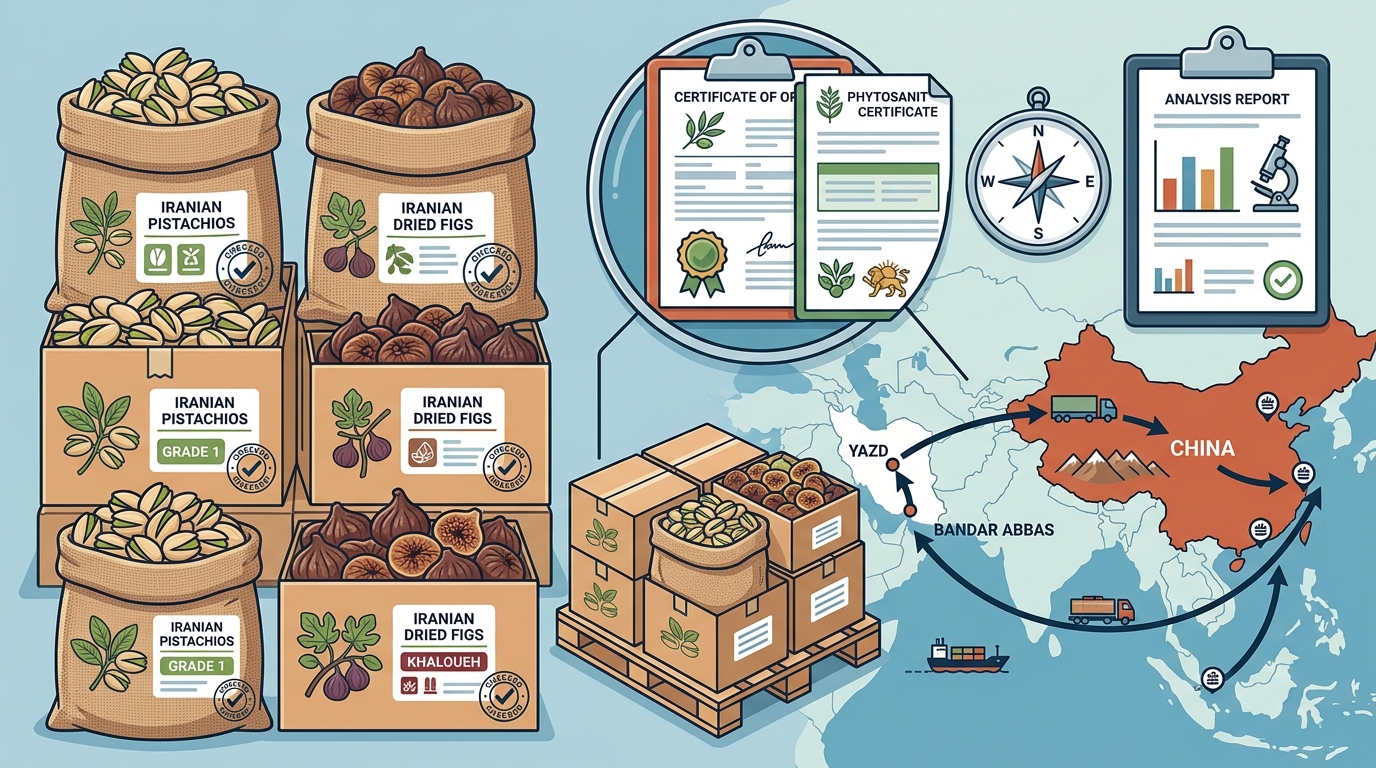
Ask for the exact grading standards used. For pistachios, ask about the cultivar (e.g., Akbari, Ahmad Aghaei) and kernel size. For dried figs, ask about the diameter and moisture content. Raiva Food provides technical specifications for their products. For example, their dried figs are graded by diameter, with options ranging from 16-18 mm to 20 mm and over. Moisture content is typically capped at 24% for dried figs to ensure shelf stability.
Logistics and Incoterms
Ask how the goods will be shipped. Raiva Food ships by sea from Bandar Abbas and overland by truck and rail. You must clarify the Incoterms 2020 terms. Are you buying FOB, CIF, or DDP? The choice affects who pays for insurance and freight. Raiva Food quotes Incoterms per enquiry based on the route and transport mode.
How to Verify Credentials
Claims on a website are not proof. You must verify that the supplier can actually deliver what they promise. Verification protects your capital and reputation.
Document Verification
Request a Certificate of Analysis (CoA) for a specific lot. Raiva Food issues export documents per shipment, including phytosanitary certificates and certificates of origin. Ask for a sample CoA before you pay. The agreed grade and specification must be restated in writing on the proforma invoice. If the supplier cannot provide a written specification, do not proceed.
Third-Party Inspection
Use a pre-shipment inspection. Raiva Food allows pre-shipment inspection through the buyer's nominated inspection agency. This is a critical step. An independent agency will check the weight, quality, and packaging before the goods leave the port. This ensures that the container you pay for matches the container you receive.
How the Export Process Works
Understanding the workflow helps you manage expectations. The process follows a strict sequence to ensure compliance and quality.
Enquiry and Quotation
The process starts with an enquiry. You send the product, volume, and destination. Raiva Food replies with a quotation and a proforma invoice. This invoice details the price, packing, and terms. You review and approve the invoice.
Production and Loading
Once payment is made, the goods are prepared. For fresh produce, this involves harvesting, grading, and packing. For dried goods, it involves sorting and packing. The goods are then loaded into containers. Raiva Food controls quality at every stage, from selecting at harvest to inspecting before loading.
Documentation and Shipping
After loading, the supplier issues the shipping documents. These include the Bill of Lading, Commercial Invoice, and Packing List. You use these documents to clear customs in China. The timeline depends on the route. Sea freight from Bandar Abbas to Chinese ports takes several weeks. Overland routes may be faster but have lower capacity.
What Drives the Cost
Price is not fixed. It fluctuates based on several factors. Understanding these drivers helps you negotiate better terms.
Grade and Quality
Packing and Volume
Packing format affects cost. Raiva Food packs dried figs in 10 kg cartons. Pistachios may be packed in different formats. The minimum order quantity (MOQ) is a key cost driver. For dried figs, the MOQ is 5 MT. For fresh produce, it is often one 40ft reefer container (20 MT). Larger orders usually result in a lower per-unit price.
Route and Logistics
The shipping route impacts the final cost. Sea freight is cheaper per ton but slower. Overland freight is faster but more expensive. The destination port in China also matters. Ports in southern China are closer to Bandar Abbas than ports in the north.
Common Mistakes to Avoid
Buyers often make errors that lead to financial loss or supply disruption. Avoiding these mistakes is crucial for long-term success.
Ignoring Moisture Content
For dried figs and raisins, moisture content is critical. If the moisture is too high, the product can mold during transit. Raiva Food specifies a maximum moisture content of 24% for dried figs and 13% for raisins. Always check the CoA for moisture levels. Do not accept goods that exceed the specified limit.
Skipping Inspection
Some buyers skip pre-shipment inspection to save money. This is a risky move. If the goods are damaged or of poor quality, you have no recourse. Always use a third-party inspection. It is a small cost compared to the value of a full container of spoiled goods.
Vague Specifications
Do not accept vague terms like "good quality." You need specific numbers. For example, "dried figs, 20 mm diameter, max 24% moisture." Vague terms lead to disputes. Ensure the proforma invoice lists the exact specifications.
Comparison with Alternatives
| Feature | Iranian Suppliers | Other Origins |
|---|---|---|
| Pistachio Varieties | Akbari, Ahmad Aghaei, Kalleh Ghouchi, Fandoghi | Varies by country |
| Dried Fig Quality | High sugar content, distinct flavor | Varies |
| Logistics | Sea from Bandar Abbas, Overland | Varies |
| Supplier Transparency | High (e.g., Raiva Food provides CoA) | Varies |
Iranian pistachios are known for their distinct flavor and color. The Akbari and Ahmad Aghaei cultivars are highly sought after. Dried figs from Iran, particularly from the Isfahan region, are prized for their sweetness. While other countries produce these goods, the specific cultivars and processing methods in Iran offer a unique product profile.
Specific Buyer Situations
Your specific business model affects how you should engage with a supplier. Different buyers have different needs.
Food Manufacturers
If you are a food manufacturer, you need consistency. You cannot have batch-to-batch variation. Raiva Food supplies to food manufacturers. They provide consistent grades and specifications. You should ask for a long-term supply agreement. This ensures you have a steady supply of raw materials.
Wholesale Distributors
If you are a wholesale distributor, you need flexibility. You may want to mix products in one container. Raiva Food allows mixed pallet loads. This is useful for distributors who want to offer a range of products. You can combine pistachios, dried figs, and other items in one shipment.
Rules and Protections
International trade is governed by rules. Understanding these rules protects your business.
HS Codes
Every product has a Harmonized System (HS) code. This code determines the tariff rate. For dried figs, the HS code is 0804.20. For pistachios, it is 0802.51. You must use the correct HS code when clearing customs. Using the wrong code can lead to penalties or delays.
Contractual Protections
Your contract is your primary protection. It should specify the quality standards, delivery terms, and dispute resolution process. Raiva Food restates the agreed grade and specification in writing on the proforma invoice. This document becomes part of the contract. Ensure that all terms are clearly defined.
Local Specifics for Iran
Iran has specific characteristics that affect the export process. Understanding these specifics helps you plan better.
Geography and Climate
Iran's climate is ideal for growing pistachios and figs. The dry, hot summers and cold winters produce high-quality crops. The main growing regions for pistachios are in the southwest, while figs are grown in Isfahan and other central provinces. This geographic diversity allows for a long harvest season.
Infrastructure
Bandar Abbas is the main port for sea exports. It is a major hub for international trade. The port has the infrastructure to handle large volumes of agricultural products. Overland routes through Turkey and other countries provide alternative shipping options. These routes can be faster for certain destinations in China.
Timing and Seasonality
Timing is critical in agricultural exports. You must align your orders with the harvest season.
Harvest Seasons
Pistachios are harvested in late summer and early autumn. Dried figs are harvested in late summer. Raiva Food provides a seasonal availability calendar for fresh lines. For dried goods, the harvest season is August to September. Loading can happen year-round from store. However, the freshest product is available immediately after harvest.
Lead Times
Lead times vary by route. Sea freight takes longer but is cheaper. Overland freight is faster but more expensive. You must plan your orders accordingly. If you need the goods quickly, consider overland shipping. If you are planning ahead, sea freight is a good option.
Long-Term Results
Building a relationship with a reliable supplier yields long-term benefits. Consistency is key.
Supply Chain Stability
A reliable supplier ensures a stable supply chain. This reduces the risk of stockouts. Raiva Food has been exporting since 2010. This track record indicates stability. They have the experience to handle challenges and ensure timely delivery.
Quality Consistency
Over time, you will see consistent quality. This is crucial for your brand reputation. If your customers expect a certain quality, you must deliver it. A supplier like Raiva Food, with strict quality controls, helps you maintain this consistency.
Key Takeaways
- Choose suppliers with a physical presence in the origin country for better quality control.
- Ask for specific technical specifications, including grade, size, and moisture content.
- Verify credentials by requesting a Certificate of Analysis and using third-party inspection.
- Understand the export process, from enquiry to shipping, to manage expectations.
- Price is driven by grade, packing, volume, and route. Negotiate based on these factors.
- Avoid common mistakes like ignoring moisture content and skipping inspection.
- Compare Iranian products with alternatives to understand their unique value.
- Use correct HS codes and contractual protections to safeguard your business.
Frequently Asked Questions
What is the minimum order quantity for Iranian dried figs?
The minimum order quantity for dried figs is typically 5 MT. This can vary depending on the supplier and packing format. Raiva Food requires a minimum of 5 MT for dried figs.
How long does it take to ship from Iran to China?
What are the main cultivars of Iranian pistachios?
The main cultivars of Iranian pistachios are Akbari, Ahmad Aghaei, Kalleh Ghouchi, and Fandoghi. Each cultivar has distinct characteristics in terms of size, color, and flavor.
Can I mix different products in one container?
Yes, you can mix different products in one container. Raiva Food allows mixed pallet loads. This is useful for buyers who want to order a variety of products.
What documents are required for import into China?
You need the Bill of Lading, Commercial Invoice, Packing List, Phytosanitary Certificate, and Certificate of Origin. Raiva Food issues these documents per shipment.
How do I verify the quality of the goods before shipping?
You can use a pre-shipment inspection through a nominated inspection agency. Raiva Food allows this. The inspector will check the weight, quality, and packaging before the goods leave the port.
What is the HS code for dried figs?
The HS code for dried figs is 0804.20. This code is used for customs clearance and tariff calculation.
Does Raiva Food provide a Certificate of Analysis?
Yes, Raiva Food provides a Certificate of Analysis for each shipment. The agreed grade and specification are restated in writing on the proforma invoice.
Conclusion
Choosing the right supplier for Iranian pistachios and dried figs is a critical decision for your business. By following the steps outlined in this guide, you can identify reliable partners, verify their credentials, and ensure a smooth import process. Raiva Food offers a transparent and professional approach to exporting these high-quality products. To start your import journey, request a quote from Raiva Food today.