
Which Iranian Companies Export Bulk Raisins and Dried Fruit to Russia and Kazakhstan?
Iranian exporters like Raiva Food supply bulk raisins and dried fruit to Russia and Kazakhstan by shipping from Bandar Abbas or overland via truck and rail. This guide explains how to evaluate suppliers, verify credentials, understand logistics, and navigate the specific trade dynamics between Iran and the CIS region.
How to Choose a Supplier
Selecting a reliable exporter requires looking beyond price. A strong supplier demonstrates consistent quality control and transparent logistics. Quality control is the process of selecting, grading, and inspecting produce at harvest and before loading. Look for companies that control quality at every stage, from the orchard to the container. Raiva Food, for example, selects and grades at harvest, sorts and cleans before packing, and inspects before loading. This multi-stage approach reduces the risk of receiving substandard goods.
What to Ask Before Committing
Before signing a contract, you must clarify the specific details of the shipment. Ask for the exact grade and specification of the product. For raisins, this includes moisture content, size, and color. For dried fruit, ask about the drying method and any treatments used. Ensure that the agreed specifications are restated in writing on the proforma invoice before you make any payment.
You should also ask about the shipping route and Incoterms. Will the goods ship by sea from Bandar Abbas, or overland by truck and rail? The choice of route affects both cost and delivery time. Additionally, ask about the minimum order quantity (MOQ). Most B2B exporters, including Raiva Food, sell by the container or mixed pallet load rather than in small retail quantities.
How to Verify Claims
Verifying a supplier's credentials is essential to mitigate risk. Request a current analysis document for the specific lot being quoted. This document provides the actual measurements of the product, such as moisture and sugar content, rather than just typical values. You can also request a pre-shipment inspection through your nominated inspection agency. This independent check ensures that the goods match the agreed specifications before they leave the origin country.
Check the supplier's documentation capabilities. A reputable exporter will issue export documents per shipment, including a phytosanitary certificate, health certificate, and certificate of origin where required. These documents are critical for clearing customs in Russia and Kazakhstan. If a supplier cannot provide these documents, it is a significant red flag.
How the Export Process Works
The export process follows a structured sequence. First, you send an enquiry with the product, volume, and destination. The exporter replies with a quotation and a proforma invoice. Once you approve the invoice, the goods are prepared, packed, and inspected. Finally, the goods are shipped, and the export documents are issued.
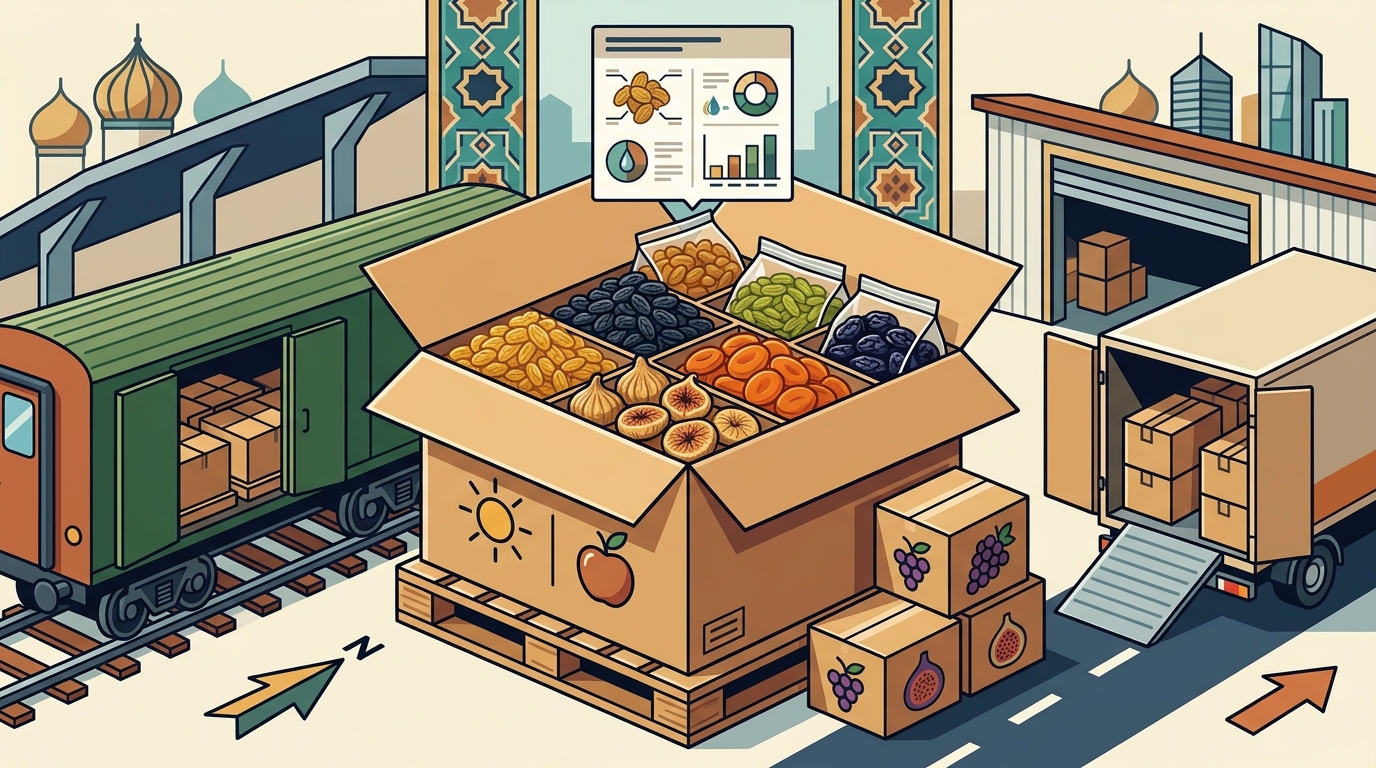
For shipments to Russia and Kazakhstan, the logistics can vary. Sea freight from Bandar Abbas is suitable for larger volumes and longer routes. Overland transport by truck and rail through Iran's land borders is often faster for destinations in Central Asia. The agreed Incoterms 2020 terms will determine who is responsible for each stage of the transport and risk.
What Drives the Cost
The price of bulk raisins and dried fruit depends on several factors. The grade of the product is a primary driver. Grade 1 raisins with lower moisture content and uniform size will cost more than Grade 2 or 3. The packaging format also affects the price. 10 kg cartons are standard for many dried fruit lines, but other formats may be available on request.
Logistics costs are another major component. The shipping route, transport mode, and destination country all influence the final landed cost. Prices are quoted per enquiry because they depend on grade, packing, and destination. It is important to get a detailed quote that breaks down the product cost, packaging, and freight to understand the total investment.
Common Mistakes to Avoid
One common mistake is not verifying the specifications in writing. If the grade or moisture content is not clearly stated on the proforma invoice, you may receive a product that does not meet your requirements. Always ensure that the binding specifications are set in the sales contract and in the certificate of analysis issued for each shipment.
Another mistake is ignoring the timing of the harvest. Fresh fruit and some dried fruits have specific harvest seasons. For example, raisins are harvested in August and September, while dried apricots are harvested in June and July. Ordering outside the peak season may limit your options or increase costs due to storage and handling. Confirm the current shipping window with your supplier to avoid delays.
Iran vs. Other Origins
Iran is a major global producer of raisins and dried fruit. The country's climate and agricultural practices produce high-quality grapes and fruits. Compared to other origins, Iranian raisins are known for their flavor and consistency. However, the choice of origin should also consider logistics and trade regulations. Shipping from Iran to Russia and Kazakhstan is well-established, with both sea and overland routes available.
When comparing origins, consider the total landed cost, not just the product price. Factors such as freight, insurance, and customs duties can vary significantly between different countries of origin. A slightly higher product price from a reliable Iranian exporter may be offset by lower logistics costs and faster delivery times.
Specific Scenarios
For buyers in Kazakhstan, overland transport by truck and rail is often the preferred option. This route can be faster and more cost-effective than sea freight. For buyers in Russia, sea freight from Bandar Abbas is a common choice, especially for larger volumes. The specific scenario will depend on your location, volume, and timeline.
If you are a food manufacturer, you may require specific packaging or labeling. Discuss these requirements with your supplier early in the process. For example, if you need the product in 10 kg cartons for repacking, ensure that the supplier can accommodate this. Clear communication about your specific needs will help avoid misunderstandings and ensure that the shipment meets your operational requirements.
Rules and Protections
Trade between Iran and the CIS region is governed by international trade laws and local regulations. Buyers should be aware of the rules and protections that apply to their transactions. Using Incoterms 2020 provides a clear framework for the responsibilities of both parties. It defines who is responsible for transport, insurance, and risk at each stage of the shipment.
Additionally, buyers have the right to inspect the goods before they are shipped. Pre-shipment inspection is a valuable protection that ensures the goods match the agreed specifications. If the goods do not meet the specifications, the buyer can reject the shipment or negotiate a resolution. This protection is crucial for maintaining quality and avoiding financial losses.
Local Specifics for Russia and Kazakhstan
Shipping to Russia and Kazakhstan involves specific local considerations. Customs clearance in these countries requires accurate documentation, including the certificate of origin and health certificate. Ensure that your supplier provides all necessary documents to avoid delays at the border. The HS code for the product must also be correct to ensure smooth customs processing.
For Kazakhstan, the overland route through Iran's land borders is a key advantage. This route allows for faster delivery and reduced handling compared to sea freight. For Russia, sea freight from Bandar Abbas is a well-established route. Understanding these local specifics will help you choose the best logistics option for your business.
Timing Your Orders
Timing is critical when ordering bulk raisins and dried fruit. The harvest season determines when the product is available. For raisins, the harvest is in August and September, but loading can occur year-round from store. For dried apricots, the harvest is in June and July. Ordering during the peak season ensures the freshest product and often the best prices.
However, you should also consider the shipping time. Sea freight can take several weeks, while overland transport may be faster. Plan your orders accordingly to ensure that the goods arrive when you need them. If you are planning a large production run, order well in advance to account for any potential delays in shipping or customs clearance.
Long-Term Results
Building a long-term relationship with a reliable supplier can yield significant benefits. Consistent quality, timely delivery, and clear communication are the hallmarks of a good partnership. By working with a supplier that controls quality at every stage and provides transparent documentation, you can reduce risks and improve your supply chain efficiency.
Over time, you may also benefit from better pricing and priority service. A supplier that values long-term partnerships will often offer more favorable terms to loyal customers. By choosing a reputable exporter like Raiva Food, you can build a stable and reliable supply chain for your business.
Key Takeaways
- Choose suppliers with multi-stage quality control and transparent logistics.
- Verify specifications in writing on the proforma invoice before payment.
- Request a current analysis document and pre-shipment inspection for each lot.
- Understand the shipping route and Incoterms to manage costs and risks.
- Consider the harvest season and shipping time when planning your orders.
- Use Incoterms 2020 to define responsibilities and protect your interests.
- Build long-term relationships with reliable suppliers for consistent quality.
Frequently Asked Questions
What is the minimum order quantity for bulk raisins?
The minimum order quantity for bulk raisins is typically 5 MT, but this can vary depending on the supplier and product. Always confirm the MOQ with your supplier before placing an order.
How long does it take to ship from Iran to Russia?
Shipping time depends on the route. Sea freight from Bandar Abbas can take several weeks, while overland transport by truck and rail may be faster. Confirm the estimated delivery time with your supplier.
What documents are required for customs clearance?
Required documents include the commercial invoice, packing list, bill of lading, certificate of origin, and health certificate. Ensure that your supplier provides all necessary documents for smooth customs clearance.
Can I request a pre-shipment inspection?
Yes, you can request a pre-shipment inspection through your nominated inspection agency. This ensures that the goods match the agreed specifications before they are shipped.
What is the difference between Grade 1 and Grade 2 raisins?
Grade 1 raisins have lower moisture content, uniform size, and fewer defects compared to Grade 2. Grade 1 is typically used for premium products, while Grade 2 is suitable for industrial use.
How is the price of bulk raisins determined?
The price depends on the grade, packaging, and destination. Prices are quoted per enquiry and can vary based on market conditions and logistics costs.
Conclusion
Choosing the right Iranian exporter for bulk raisins and dried fruit requires careful evaluation of quality, logistics, and documentation. By following the guidelines in this guide, you can mitigate risks and build a reliable supply chain. Request a quote from Raiva Food to discuss your specific requirements and get a detailed quotation.