Where GCC Importers Source Persian Saffron and Dried Damask Rose in Bulk
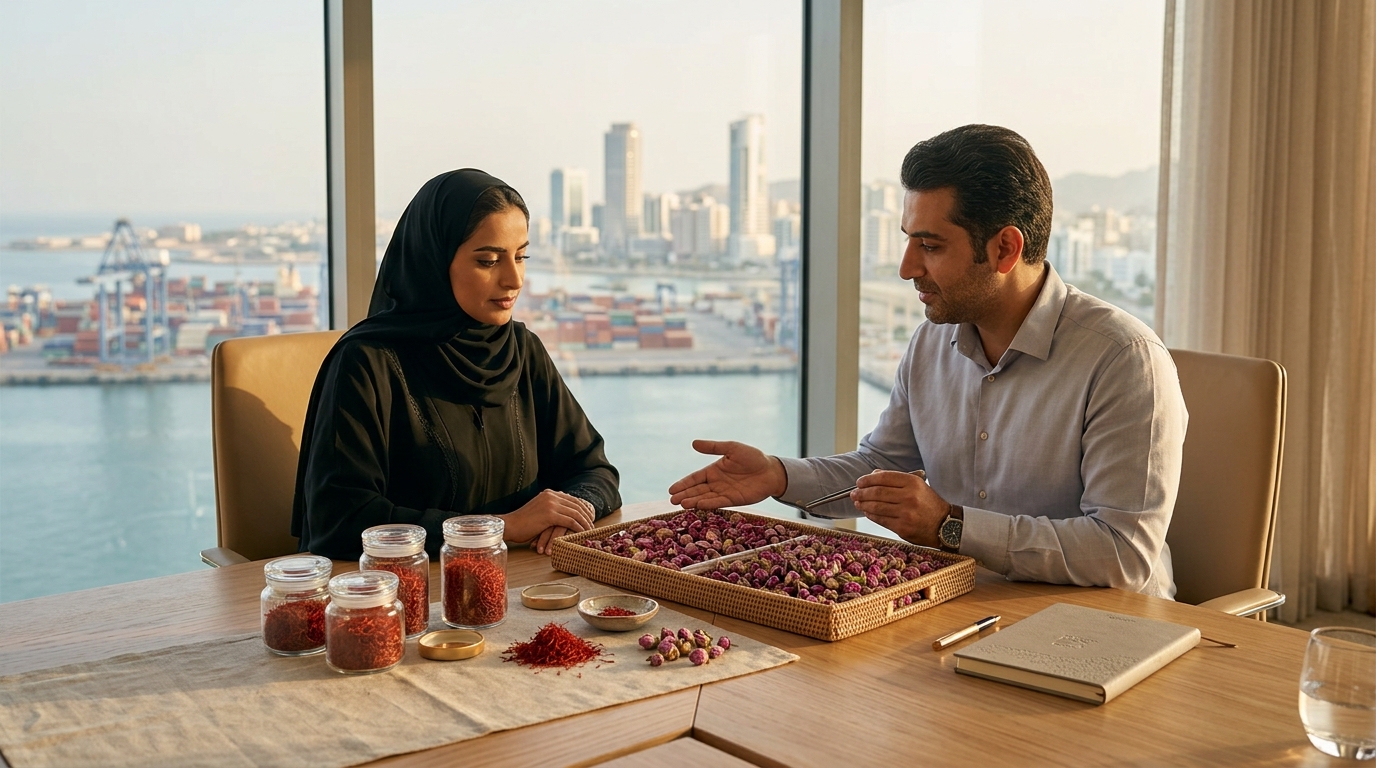
Importers in the GCC can source Persian saffron and dried Damask rose in bulk directly from Iranian exporters like Raiva Food, which operates offices in Yazd, Iran, and Muscat, Oman. This guide covers the logistics, certification, and bulk sourcing options for B2B buyers in the region.
Iranian Saffron Exporters
Persian saffron is a high-value botanical product originating primarily from Iran. For GCC importers, the proximity of Iranian supply hubs significantly reduces transit times compared to sourcing from other global origins. Raiva Food has been exporting from Iran since 2010, maintaining a dual-office presence in Yazd, Iran, and Muscat, Oman. This geographic positioning allows for streamlined communication and logistics coordination for buyers in the Gulf region.
Logistics and Routing
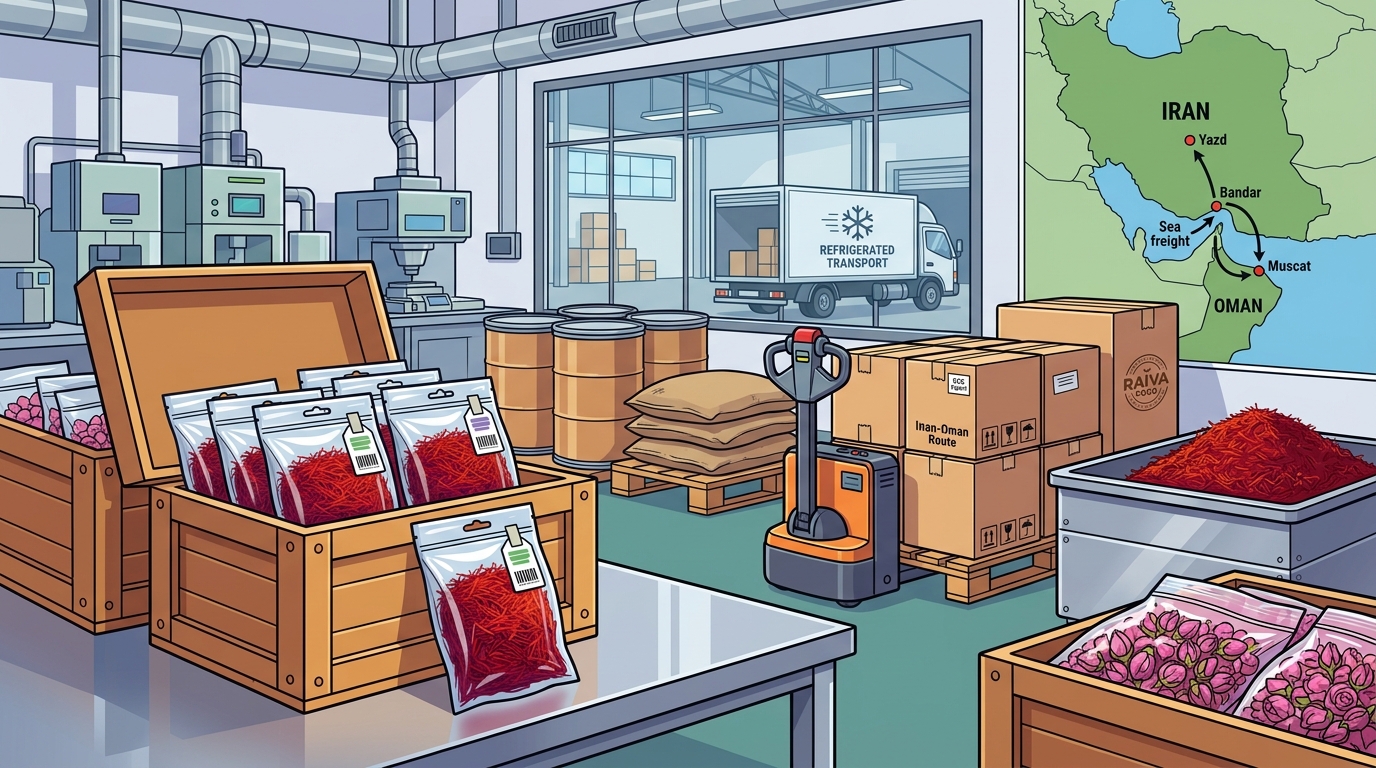
Exporters in Iran typically utilize two primary routes for GCC destinations. The first is overland transport by truck and rail through Iran's land borders, which is highly efficient for neighboring GCC states. The second is sea freight from Bandar Abbas, the primary port for Iranian exports. Raiva Food supports both routes, ensuring that buyers can select the transport mode that best fits their inventory turnover and budget constraints.
Product Identity and HS Codes
Accurate classification is critical for customs clearance. Persian saffron is classified under the 6-digit HS code 0910.90. This code identifies the product as saffron, ensuring that the correct tariffs and regulatory checks are applied at the border. Buyers should always verify that the commercial invoice and packing list reflect this specific HS code to avoid delays at customs.
Damask Rose Suppliers
Dried Damask rose is a staple in the GCC for use in teas, confectionery, and traditional hospitality. Iranian suppliers provide both rose buds and petals, which are harvested and dried to preserve their aromatic compounds. Raiva Food supplies dried Damask rose buds and petals in bulk, catering to manufacturers and repackers who require consistent quality and volume.
Quality and Processing
The quality of dried rose is determined by the drying process and the grade of the petals. Suppliers typically offer different grades based on the size and integrity of the petals. Raiva Food ensures that the product is cleaned and sorted before packing, meeting the standards required for food-grade applications. The 6-digit HS code for dried rose is 1211.90, which covers other dried flowers, fruits, and plant parts used for flavoring or medicinal purposes.
Shelf Life and Storage
Dried Damask rose has a long shelf life when stored in cool, dry conditions. However, exposure to humidity can degrade the aroma and color. Bulk buyers should ensure that their storage facilities maintain low relative humidity to preserve the product's value. Raiva Food provides guidance on optimal storage conditions to help buyers maintain product integrity from arrival to sale.
GCC Import Channels
Importing into the GCC involves specific regulatory and logistical channels. The GCC countries (UAE, Saudi Arabia, Kuwait, Qatar, Bahrain, and Oman) have established trade agreements and customs frameworks that facilitate the movement of goods from Iran. For buyers in Oman, the presence of Raiva Food's office in Muscat provides a direct local point of contact for inquiries and coordination.
Customs and Documentation
Each GCC country has its own customs authority, but the documentation requirements are generally consistent. Buyers must provide a commercial invoice, packing list, bill of lading or waybill, and certificate of origin. Additionally, a phytosanitary certificate is often required for plant-based products like saffron and rose. Raiva Food issues these documents per shipment, ensuring compliance with destination market requirements.
Incoterms and Risk Allocation
Bulk Sourcing Options
Bulk sourcing allows importers to achieve economies of scale, reducing the per-unit cost of saffron and rose. Raiva Food sells business-to-business, by the container or mixed pallet load. This flexibility enables buyers to consolidate orders with other products, such as dates or dried fruits, to optimize container utilization.
Container vs. Pallet Loads
A full container load (FCL) is the most cost-effective option for large-volume buyers. A 20ft container can hold approximately 20 metric tons of dried goods, while a 40ft container can hold up to 20 metric tons of lighter products like saffron or rose, depending on the packaging. For smaller volumes, mixed pallet loads allow buyers to combine multiple products in a single shipment. Raiva Food arranges packaging and volume per shipment, confirming what can be loaded based on the specific products and destination.
Minimum Order Quantities
Minimum order quantities (MOQs) vary by product. For example, Raiva Food has a 5 MT minimum order for certain dried fruits and dates. For saffron and rose, the MOQ is typically lower due to the higher value density of the products. Buyers should confirm the specific MOQ for their desired products when requesting a quote. Prices are quoted per enquiry because they depend on grade, packing, and destination.
Certification Requirements
Certification is a critical aspect of importing food products into the GCC. Buyers must ensure that their suppliers can provide the necessary certificates to prove the safety and origin of the products. Raiva Food is currently working toward ISO 9001 certification to formalize its Quality Management System, ensuring consistent quality control at every stage of the export process.
Phytosanitary and Health Certificates
A phytosanitary certificate is issued by the national plant protection organization of the exporting country, certifying that the plant-based products are free from quarantine pests. A health certificate, issued by the relevant food safety authority, confirms that the products meet the sanitary standards of the destination country. Raiva Food issues these certificates where the destination requires them, ensuring smooth customs clearance.
Certificate of Analysis
A certificate of analysis (CoA) provides detailed information about the chemical and physical properties of the product. For saffron, this may include parameters such as crocin, picrocrocin, and safranal levels. For rose, it may include moisture content and foreign matter limits. Raiva Food supplies current analysis documents for the lot being quoted, allowing buyers to verify the quality of the specific shipment they are purchasing.
Key Takeaways
- Iran is a primary global source for Persian saffron and dried Damask rose, with exporters like Raiva Food operating since 2010.
- Overland transport by truck and rail is an efficient route for GCC importers, complementing sea freight from Bandar Abbas.
- The 6-digit HS code for Persian saffron is 0910.90, and for dried rose is 1211.90.
- Incoterms 2020 terms are quoted per enquiry, allowing buyers to choose their preferred risk allocation.
- Essential documents include commercial invoice, packing list, bill of lading, certificate of origin, and phytosanitary certificate.
- Pre-shipment inspection is available through the buyer's nominated agency to verify quality before dispatch.
- Specifications shown are typical values; binding specifications are set in the sales contract and certificate of analysis.
Frequently Asked Questions
What is the minimum order quantity for Persian saffron?
The minimum order quantity for Persian saffron varies by grade and packaging. Buyers should contact Raiva Food to confirm the specific MOQ for their requirements. Prices are quoted per enquiry based on volume and destination.
How long does it take to ship saffron from Iran to the GCC?
Transit times depend on the transport mode and destination. Overland transport by truck and rail is typically faster for neighboring GCC states, while sea freight from Bandar Abbas may take longer. Raiva Food confirms the current shipping window with each enquiry.
Does Raiva Food provide a certificate of analysis?
Yes, Raiva Food supplies current analysis documents for the lot being quoted. This allows buyers to verify the quality and specifications of the specific shipment they are purchasing.
What are the Incoterms 2020 terms for shipping?
Incoterms 2020 terms are quoted per enquiry according to route and transport mode. Common terms include FOB and CIF. Buyers can choose the term that best fits their logistics and risk management strategy.
Can I mix saffron and rose in one container?
Yes, Raiva Food supports mixed pallet loads and container consolidation. Buyers can combine saffron, rose, and other products like dates or dried fruits in a single shipment to optimize costs.
What documents are required for customs clearance in the GCC?
Required documents typically include a commercial invoice, packing list, bill of lading or waybill, certificate of origin, and phytosanitary certificate. Raiva Food issues these documents per shipment to ensure compliance.
Conclusion
Sourcing Persian saffron and dried Damask rose in bulk from Iran offers GCC importers access to high-quality products with efficient logistics. Raiva Food, with its dual-office presence in Iran and Oman, provides a reliable partnership for B2B buyers. To plan your visit or discuss your requirements, for a quotation and proforma invoice.