

Exporting Aseptic Tomato Paste from Iran to Iraq, Turkey, and Russia
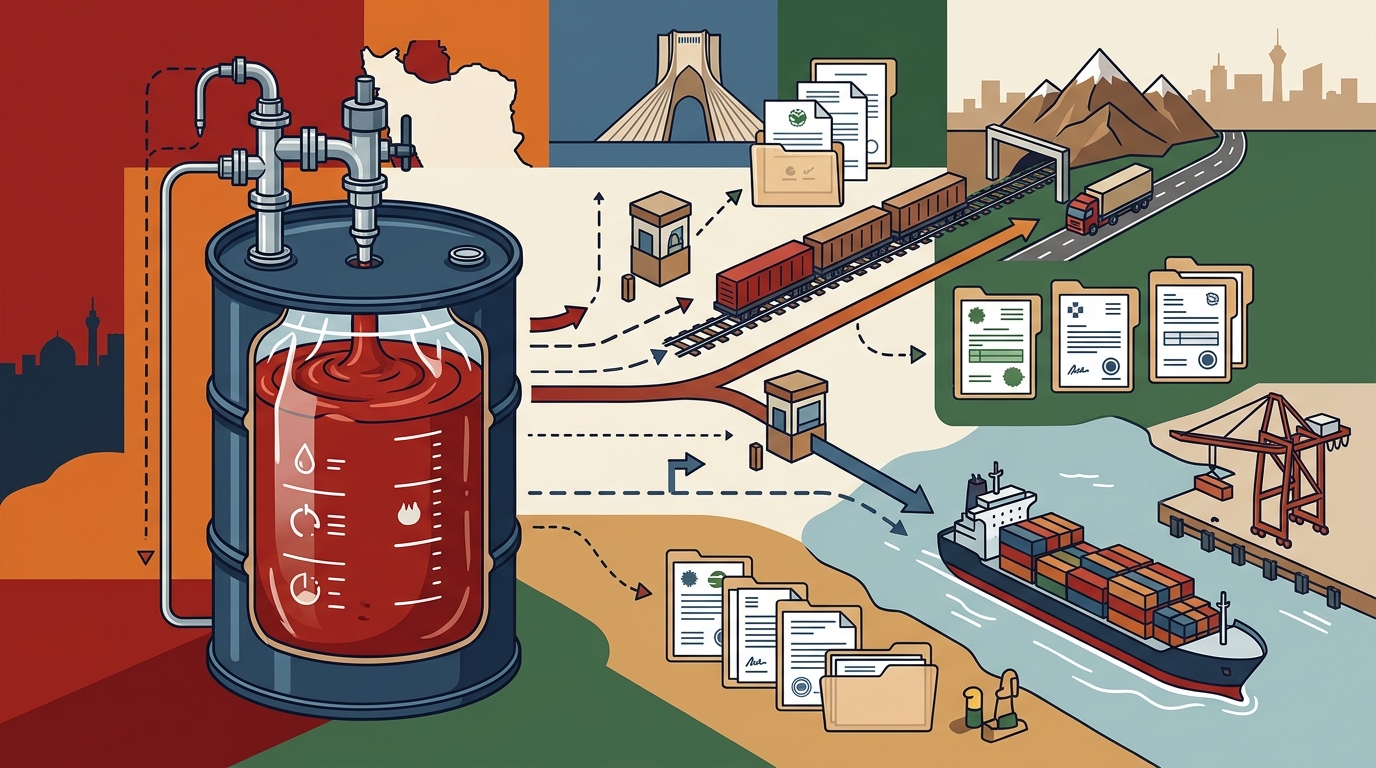
Iranian suppliers export aseptic tomato paste in 235 kg drums to Iraq, Turkey, and Russia using sea and overland routes. This guide details the specific packaging specifications, logistics pathways, and quality standards required for these three key markets. It covers the technical requirements for Brix levels, drum configurations, and the documentation needed to clear customs in each destination.
Market Overview: Iraq, Turkey, and Russia
These three countries represent the primary demand hubs for Iranian tomato paste. Each market has distinct logistical advantages and consumption patterns that influence how suppliers structure their exports. Understanding these differences is critical for buyers looking to secure consistent supply.
Iraq: The Overland Hub
Iraq is a major consumer of tomato paste, primarily for ketchup and sauce production. The proximity to Iran allows for efficient overland transport by truck. This route reduces transit time significantly compared to sea freight, making it ideal for buyers who require frequent, smaller deliveries. The border crossings are well-established, facilitating smooth customs clearance for food products.
Turkey: The Sea Freight Gateway
Turkey serves as a massive processing and re-export hub. Iranian paste is often shipped via sea freight from Bandar Abbas to Turkish ports. This route is cost-effective for large container loads. Turkish manufacturers use this paste for industrial-scale sauce production, requiring strict adherence to color and lycopene standards.
Russia: The Eastern Market
Russia represents a growing market for Iranian food products. While sea freight is an option, overland routes via rail and truck are increasingly popular due to geopolitical shifts in trade lanes. Buyers in Russia often look for consistent Brix levels and reliable supply chains that can handle the longer transit times associated with this region.
Drum Packaging Specifications
Aseptic tomato paste is typically supplied in 235 kg drums. This packaging format is the industry standard for bulk industrial use. The drums are designed to maintain the sterility of the paste, ensuring a long shelf life without the need for refrigeration. Understanding the physical specifications of these drums is essential for planning warehouse storage and loading logistics.
Drum Dimensions and Weight
Pallet Configuration
Drums are usually packed four per pallet. This configuration ensures stability during transport and allows for easy handling by forklifts. The pallets are floor-loaded in containers, which is a common practice for this type of product. This loading method helps distribute the weight evenly across the container floor, preventing damage to the drums during transit.
Container Loadability
A standard 20-foot container can hold approximately 20 metric tons of aseptic tomato paste. This equates to roughly 85 drums per container. For buyers requiring larger volumes, a 40-foot high-cube container can accommodate up to 40 metric tons. The exact loadability may vary slightly depending on the specific drum dimensions and the loading method used by the supplier.
Quality Standards and Brix Levels
The quality of aseptic tomato paste is defined by its Brix level, color, and lycopene content. These parameters determine the paste's suitability for different end products. Buyers must specify their required Brix level when placing an order to ensure the product meets their manufacturing needs.
Brix Concentration Levels
Color and Lycopene
Color is measured using the Bostwick tube and the a/b ratio. A higher a/b ratio indicates a brighter red color, which is desirable for retail products. Lycopene content is another key indicator of quality. It is measured in mg/100g and affects the paste's nutritional profile and color stability. Suppliers provide these metrics in the certificate of analysis for each shipment.
Hot Break vs. Cold Break
Paste can be processed using either hot break or cold break methods. Hot break paste is cooked at high temperatures, which can affect the flavor profile. Cold break paste is processed at lower temperatures, preserving more of the natural flavor and color. Buyers should specify their preferred break type based on their production requirements.
Logistics and Shipping Routes
Logistics play a crucial role in the cost and reliability of tomato paste exports. The choice between sea and overland transport depends on the destination and the buyer's inventory needs. Efficient logistics ensure that the paste arrives in optimal condition, ready for processing.
Sea Freight from Bandar Abbas
Bandar Abbas is the primary port for Iranian sea exports. From here, containers are shipped to ports in Turkey and Russia. Sea freight is the most cost-effective option for large volumes. Transit times vary depending on the destination, but they are generally predictable. Buyers should factor in port handling times and customs clearance when planning their supply chain.
Overland Transport by Truck and Rail
Required Documentation
Proper documentation is essential for clearing customs and ensuring compliance with food safety regulations. Each shipment must be accompanied by a set of standard documents that verify the origin, quality, and safety of the product.
Commercial and Shipping Documents
The commercial invoice and packing list provide details about the product, quantity, and value. The bill of lading or waybill serves as the contract of carriage. These documents are required by customs authorities and banks for payment processing. Accurate documentation prevents delays and additional costs at the border.
Certificates of Origin and Health
A certificate of origin confirms that the product was manufactured in Iran. This is often required for tariff preferences or trade agreements. A health certificate, issued by the relevant food safety authority, confirms that the product meets sanitary standards. These certificates are crucial for gaining entry into regulated markets like Turkey and Russia.
Phytosanitary Certificates
Although tomato paste is a processed product, a phytosanitary certificate may still be required by some destinations. This certificate confirms that the product is free from pests and diseases. It is issued by the plant protection organization of the exporting country. Buyers should check the specific requirements of their destination country to ensure all necessary certificates are included.
Key Takeaways
- Iraq, Turkey, and Russia are the primary markets for Iranian aseptic tomato paste.
- Standard packaging is 235 kg drums, with four drums per pallet.
- Brix levels of 28-30%, 30-32%, and 36-38% are the most common concentrations.
- Sea freight from Bandar Abbas is cost-effective for Turkey and Russia.
- Overland transport by truck and rail is preferred for Iraq due to proximity.
- Proper documentation, including certificates of origin and health, is mandatory.
- Quality parameters like color and lycopene must be specified in the contract.
- Suppliers like Raiva Food provide detailed specifications and documentation for each shipment.
Frequently Asked Questions
What is the minimum order quantity for aseptic tomato paste?
The minimum order quantity is typically one full container, which is approximately 20 metric tons for a 20-foot container. This ensures efficient shipping and handling.
How long does it take to ship to Turkey?
Sea freight to Turkey typically takes 7 to 14 days, depending on the specific port and shipping schedule. Overland options are not commonly used for Turkey due to distance.
Can I request a specific Brix level?
Yes, you can request specific Brix levels such as 28-30%, 30-32%, or 36-38%. The supplier will confirm availability based on current stock and production schedules.
What documents are required for customs clearance in Russia?
Standard documents include the commercial invoice, packing list, bill of lading, certificate of origin, and health certificate. Additional documents may be required depending on specific Russian regulations.
Is refrigeration required for aseptic tomato paste?
No, aseptic tomato paste does not require refrigeration. It is shelf-stable and can be stored at ambient temperatures in a dry, cool place.
How is the quality of the paste verified?
Quality is verified through a certificate of analysis provided with each shipment. This document includes details on Brix, color, lycopene, and other key parameters.
Can I mix different Brix levels in one container?
Generally, it is recommended to keep Brix levels consistent within a container to ensure uniformity in processing. However, specific arrangements can be made with the supplier.
What is the shelf life of aseptic tomato paste?
The shelf life is typically 12 to 18 months when stored in unopened drums at ambient temperatures. Once opened, the paste should be used promptly.
Conclusion
Exporting aseptic tomato paste to Iraq, Turkey, and Russia requires a clear understanding of packaging, quality, and logistics. By specifying the correct Brix levels and ensuring proper documentation, buyers can secure a reliable supply of high-quality paste. Request a quote from Raiva Food to discuss your specific requirements and receive a detailed proforma invoice.