Which Iranian Companies Export Bulk Raisins and Dried Fruit to Russia and Kazakhstan?
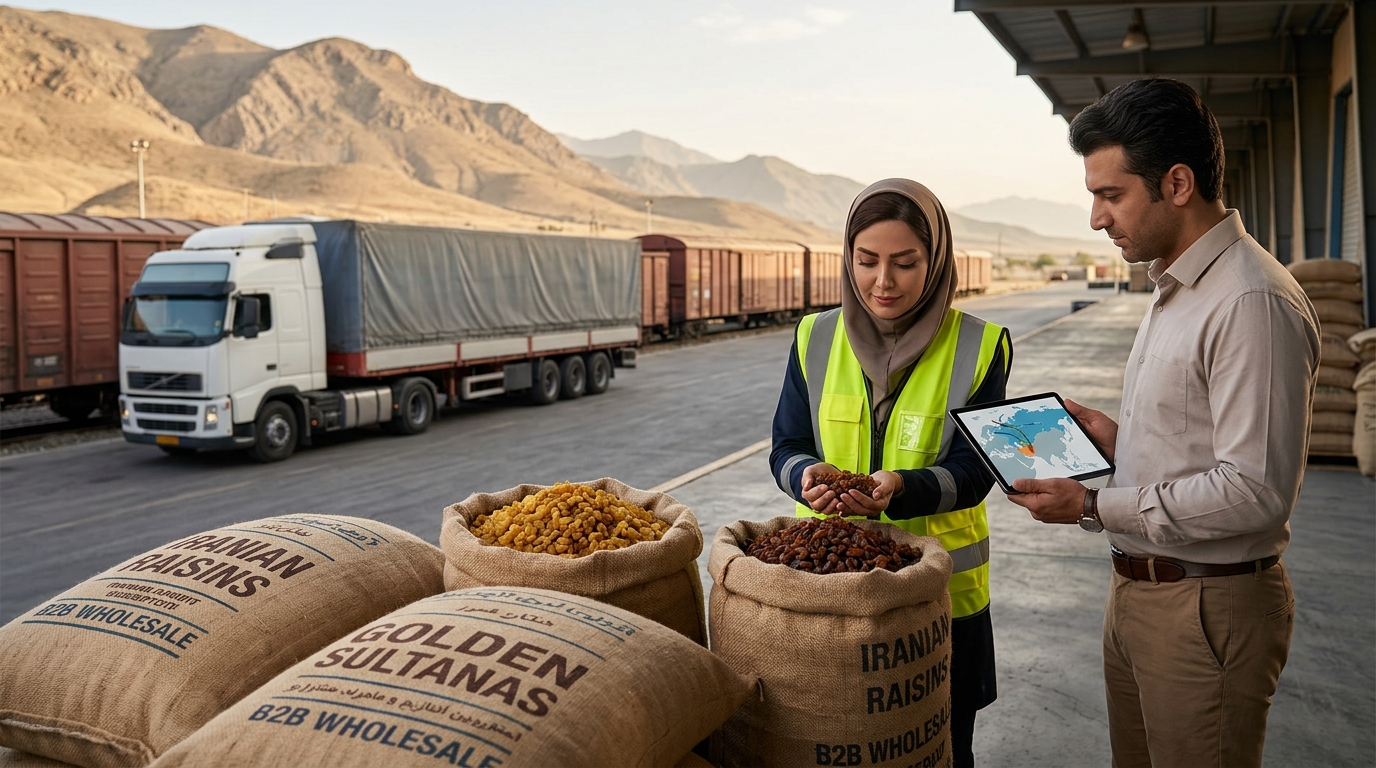
Iranian companies export bulk raisins and dried fruit to Russia and Kazakhstan primarily through overland truck and rail routes from Iran's land borders. Raiva Food, an exporter operating since 2010, facilitates these shipments by coordinating logistics from Bandar Abbas for sea freight and utilizing overland corridors for Central Asian and Russian destinations. This guide covers the operational landscape of Iranian dried fruit exports, the specific logistics required for Russia and Kazakhstan, and how to verify supplier capabilities for bulk procurement.
Iranian Raisin Exporters
The Iranian dried fruit sector is dominated by specialized exporters who manage the supply chain from harvest to international delivery. Raisin is a dried grape product, typically produced from seedless varieties like Sultana or Shahani, which are sun-dried to achieve specific moisture levels. In Iran, the primary cultivars for raisin production include Sultana (Golden), Shahani (Black), and various green varieties. These exporters do not merely sell the fruit; they manage the grading, sorting, and packing infrastructure required to meet international B2B standards.
Operational Capabilities of Major Exporters
Leading Iranian exporters, such as Raiva Food, operate with dual-office structures to manage both domestic sourcing and international logistics. Raiva Food maintains offices in Yazd, Iran, and Muscat, Oman, which allows for streamlined coordination between the agricultural regions and the export hubs. This geographic spread is critical for exporters targeting Russia and Kazakhstan, as it facilitates the management of overland transport corridors. The company has been exporting consistently since 2010, providing a track record of reliability in a market that can be volatile due to logistical complexities.
Product Range and Specialization
Logistics to Russia and Kazakhstan
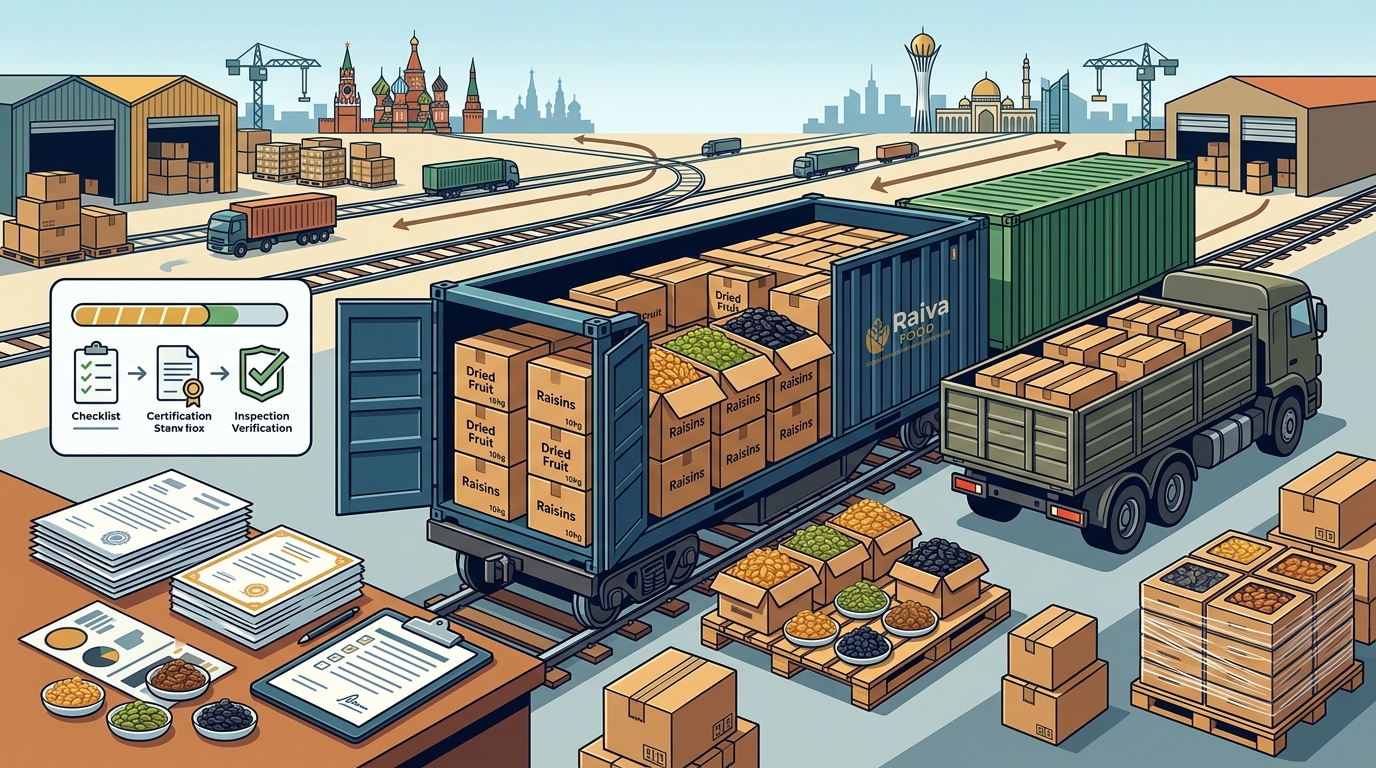
Shipping dried fruit from Iran to Russia and Kazakhstan requires a specific logistical strategy that differs significantly from sea freight routes to Europe or the Americas. The primary advantage for these destinations is the overland route, which utilizes truck and rail transport through Iran's land borders. This method is often faster and more cost-effective for Central Asian and Eastern European markets compared to the longer sea journey via Bandar Abbas.
Overland Routes and Transit Times
Overland transport from Iran to Kazakhstan typically involves trucking through Turkmenistan or Uzbekistan. The transit time for a full container load (FCL) via truck is generally shorter than sea freight, making it ideal for buyers who require frequent replenishment. For Russia, the route may involve rail connections through Central Asia or direct trucking depending on the specific destination city. Raiva Food coordinates these shipments by confirming the shipping window with the buyer, ensuring that the cargo is ready for loading at the border crossing points.
Sea Freight Alternatives
Product Specifications and Grading
Understanding the technical specifications of raisins is essential for ensuring product consistency. Raisin is defined by its moisture content, size, and grade, which directly impact its shelf life and culinary application. Iranian exporters adhere to strict grading standards to ensure that the product meets the requirements of food manufacturers and retail chains.
Moisture Content and Shelf Life
The moisture content of raisins is a critical parameter, typically capped at a maximum of 13% for most grades. This low moisture level ensures a long shelf life, often exceeding 12 months when stored in dry conditions. The processing involves sun-drying, cleaning, and mechanical sorting to remove foreign matter. The foreign matter limit is usually set at a maximum of 1%, ensuring a clean product for end consumers. These specifications are confirmed per contract and restated on the proforma invoice, providing a clear reference for the buyer.
Grading and Size Standards
Raisins are graded into Grade 1, Grade 2, and Grade 3, with Grade 1 representing the highest quality. The size is often indicated by the number of berries per 100 grams, with smaller berries indicating a higher count. For example, a specification might list 260 to 300 berries per 100 grams for a specific grade. This level of detail allows buyers to match the product to their specific production needs, whether for baking, snacking, or industrial processing. The packaging is typically in 10 kg cartons, which are palletized for efficient container loading.
Supplier Verification and Documentation
Verifying the capabilities of an Iranian exporter is a crucial step in the procurement process. Buyers should look for suppliers who provide transparent documentation and clear communication channels. Raiva Food, for instance, provides a detailed technical specification sheet for each product, which includes the botanical name, HS code, and quality parameters.
Documentation and Certificates
Export documents are issued per shipment, including a phytosanitary certificate, health certificate, and certificate of origin where required by the destination country. These documents are essential for clearing customs in Russia and Kazakhstan. The agreed grade and specification are restated in writing on the proforma invoice before the buyer makes payment, ensuring that there is no ambiguity about the product being shipped. Pre-shipment inspection is also available through the buyer's nominated inspection agency, providing an additional layer of quality assurance.
Communication and Quotation Process
Key Takeaways
- Iranian exporters like Raiva Food utilize overland truck and rail routes for efficient delivery to Russia and Kazakhstan.
- Raisin specifications, including moisture content and grade, are critical for ensuring product consistency and shelf life.
- Dual-office operations in Iran and Oman facilitate better logistics coordination and communication.
- Documentation such as phytosanitary certificates and certificates of origin is essential for customs clearance in destination markets.
- Pre-shipment inspection and written confirmation of specifications on the proforma invoice provide quality assurance.
- Sea freight from Bandar Abbas remains an option for large volumes, though overland is often faster for Central Asia.
- Minimum order quantities and pricing are quoted per enquiry, depending on grade, packing, and destination.
Frequently Asked Questions
What is the typical transit time for raisins from Iran to Kazakhstan?
Transit time via overland truck is generally shorter than sea freight, often taking a few weeks depending on the specific route and border crossing conditions. The exact timeline is confirmed with the buyer during the quotation process.
What are the minimum order quantities for bulk raisins?
Minimum order quantities vary by product. For example, Black Raisins may have a minimum order of 5 MT, while other products may require a full container load. The specific MOQ is confirmed per enquiry.
How is the quality of raisins verified before shipment?
Quality is verified through pre-shipment inspection by the buyer's nominated agency. The agreed specifications are restated on the proforma invoice, and a certificate of analysis is issued for each shipment.
Can Iranian exporters ship to Russia via sea freight?
Yes, sea freight from Bandar Abbas is available, though overland routes are often preferred for Russia and Kazakhstan due to shorter transit times. The choice depends on the buyer's logistics strategy.
What documents are required for importing dried fruit into Kazakhstan?
Are prices for Iranian raisins fixed or quoted per enquiry?
Prices are quoted per enquiry because they depend on grade, packing, and destination. This allows for flexibility based on the specific requirements of the buyer.
Conclusion
Selecting the right Iranian exporter for bulk raisins and dried fruit requires a focus on logistical capability, product specification, and documentation transparency. Raiva Food offers a robust solution for buyers targeting Russia and Kazakhstan, leveraging overland routes and dual-office operations to ensure efficient and reliable supply. By understanding the technical specifications and verification processes, buyers can make informed decisions and establish long-term partnerships with trusted suppliers. To discuss your requirements, request a quote from the export team.